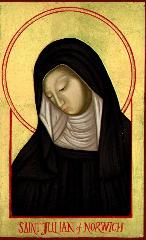
JULIAN OF NORWICH, SHOWING OF LOVE
TEXTS AND CONTEXTS, TIME
LINE & MAPS
 have now, in my
retirement, studied the lives and writings of three women, all
of whom included theology in their works, Birgitta of Sweden, Julian of Norwich, Elizabeth Barrett
Browning. All three had access to Hebrew and I found in order to edit
their writings that I, too, needed to learn Hebrew. In the process of
editing their writings, I also drew up time lines, tracing not
only their texts but also their contexts: those who came
before them, influencing them, giving them models; those who
were their contemporaries, colleagues and friends; and those
who came after them, preserving their texts, using them as
models. (Other such time lines, compiled from the papers at
'The City and the Book' international conferences in Florence,
may be found at http://www.florin.ms/spacetime.html
and http://www.florin.ms/gimelf.html.)
For time is like a river into which streams flow and which
becomes an ocean. One goes ever forward, not backward. And the
sequence of books written in time by authors who have read
other authors and who will be read by further authors is also
not unlike the genealogies of human families as mirrored in
the shelves of libraries. Again, going ever forward and not
backward. In this timeline I study what texts were in what
manuscripts, for instance that library of texts that is the
Amherst Manuscript, and who owned them, to trace these
influences, even to the extent of giving the evidence for the
much-travelling between Norwich and Oxford, Norwich and Italy,
Norwich and Flanders, of Cardinal Adam Easton's magnificent
library of theological books. One can play games with this
list, for instance searching 'Cambrai', 'Lowe', 'Stapleton',
'Bramston', down the centuries. These writers, men and women,
similarly became my inspiration and model as a writer, as a
scholar, as a contemplative.
have now, in my
retirement, studied the lives and writings of three women, all
of whom included theology in their works, Birgitta of Sweden, Julian of Norwich, Elizabeth Barrett
Browning. All three had access to Hebrew and I found in order to edit
their writings that I, too, needed to learn Hebrew. In the process of
editing their writings, I also drew up time lines, tracing not
only their texts but also their contexts: those who came
before them, influencing them, giving them models; those who
were their contemporaries, colleagues and friends; and those
who came after them, preserving their texts, using them as
models. (Other such time lines, compiled from the papers at
'The City and the Book' international conferences in Florence,
may be found at http://www.florin.ms/spacetime.html
and http://www.florin.ms/gimelf.html.)
For time is like a river into which streams flow and which
becomes an ocean. One goes ever forward, not backward. And the
sequence of books written in time by authors who have read
other authors and who will be read by further authors is also
not unlike the genealogies of human families as mirrored in
the shelves of libraries. Again, going ever forward and not
backward. In this timeline I study what texts were in what
manuscripts, for instance that library of texts that is the
Amherst Manuscript, and who owned them, to trace these
influences, even to the extent of giving the evidence for the
much-travelling between Norwich and Oxford, Norwich and Italy,
Norwich and Flanders, of Cardinal Adam Easton's magnificent
library of theological books. One can play games with this
list, for instance searching 'Cambrai', 'Lowe', 'Stapleton',
'Bramston', down the centuries. These writers, men and women,
similarly became my inspiration and model as a writer, as a
scholar, as a contemplative.
*=birth
†=death
621 B.C. Huldah advocates the study of the Torah to
King Josiah in Jerusalem (2 Kings 22.14-23.3, 2 Chronicles
34.22-33)
605 B.C. King
Jehoiakim, son of King Josiah, destroys Jeremiah's scroll of
prophecies dictated to Baruch. Jeremiah and Baruch reassemble
lost, censored text (Jeremiah 36)
587 B.C. Jeremiah
has deeds to property written up by Baruch, sealed, and placed
in an earthern jar (Jeremiah 32.14). Practice still be
observed with the Dead Sea Scrolls.
445-4 B.C. Ezra advocates the study of the Torah in
Jerusalem (Nehemiah 8.1-18)
*185-†232 Origen of Alexandria, deeply versed in Hebrew
and Greek, favorable to women, whose writings, translated by
Rufinus, Adam Easton owned
327 †Helena
*274-†337 Constantine, 302 Proclaimed Emperor at York,
312 Christianity adopted by Empire
*340-†420 Jerome, influenced by Origen
*347-†404 Paula
and *368-†419/420 Eustochium Julia, Paula's daughter. All three
laboured together translating the Bible from Hebrew and Greek
into Latin, all three dying in Bethlehem
381-384Egeria's pilgrimages
Later half of 5th centuryPseudo-Dionsyius,
who pretends to be an eyewitness to the Crucifixion and to
Paul's preaching on the Areopagus in Acts, whose writings
influence Abbot Suger to invent Gothic architecture at St
Denis (Dionysius, thought also to cause France's conversion to
Christianity), whose works in a Victorine manuscript Adam
Easton owned and whom Julian cites in Showing of Love
719 †Pega, Guthlac's
sister
on
pilgrimage in Rome
c 1000Guthrithyr of Iceland
1105-70?-Rabbi
Joseph
Kimhi
1086 A Jewish
Isaac living in Mancroft, Norwich
*1115-†1180 John of Salisbury, his Policraticus
owned in manuscript by Adam Easton, in Julian's Lord and
Servant Parable
1144 Murder
of William of Norwich, Jewry present in Norwich until 1290,
under the protection of the royal Castle, including Rabbinic
scholars and poets, following that date only by conversi
1146 Carrow Priory, dedicated to
St Mary, founded by King Stephen, who also gives Priory St
Julian's Church, Norwich Cathedral Priory having oversight of
them
1155 *Margaret in Jerusalem
1160 Aelred of
Rievaulx writes De Ordo Inclusarum for sister
*1160?-†1235? Rabbi
David Kimhi, Rabbi Joseph Kimhi's son, author of Miklol
(Perfection), owned in manuscript by Adam Easton, who
also had access to Kimhi's Psalm
Commentary, used in Julian's Lord and Servant Parable
*1160-†1240 Cardinal Jacques de Vitry, supporter of Marie d'Oignies, influences
Birgitta's Magister Mathias, Cardinal Adam Easton, Margery
Kempe's confessor
*1167-†1213 Beguine Marie
d'Oignies
1175 Isaac's House (the Music
House), Norwich, built by Isaac Jurnet. Has same stonemason
marks as at Carrow Priory, Cathedral Priory Infirmary
1187 Margaret of Jerusalem in
Seige of Jerusalem. Thomas of Froidmont, her brother, will
write Liber de modo bene vivendi ad sororem for her,
owned by Birgitta of Sweden and in Amherst Manuscript
1190 February,
attacks against Jews in Lynn which spread to Norwich.
†Rabbi Moses Kimhi, son of Rabbi Joseph, older brother to
Rabbi David Kimhi, all three writers of Hebrew grammar,
theology
1210 Isaac of Norwich (Isaac
Jurnet) imprisoned by King John. *Mechthild of Magdebourg
1222-36 Letters
of Dominicans Jordan of Saxony and Diana d'Andalò
1231 †St
Elizabeth of Hungary
1233 London,
Public Record Office tallage roll with caricature of Norwich Jews, Isaac, Mose, Abigail.
Mechthild of Magdebourg a Beguine, later becoming a Dominican
Tertiary. After a great illness she will begin to write her Revelations
or The Flowing Light of the Godhead with encouragement
of Dominican Heinrich of Halle
1236? Apostoli
heretic Aleydis and 20 of her companions burned at Cambrai
1246 Bishop
Richard Wich of Chichester formulates Canon for Anchoresses
1247 Anchoress,
Chichester
1253 Hak Jurnet
of Norwich, imprisoned in the Tower of London, converts to
Christianity. Bishop Richard Wich of Chichester's Will
provides bequests for five anchorites, two men and three
women.
1255 Murder of
Hugh of Lincoln
1256 Ela, niece
of Walter, Bishop of Norwich, Anchoress at Massingham
1256 *Gertrude
the Great of Helfta
1260 *Meister
Eckhart, Friend of God
*1270-†1340-Nicolas of Lyra
1273Mechthild
perhaps Prioress of formerly Cistercian, later Dominican,
Convent of St Agnes, Magdebourg
1277 *Cristina
Ebner, Friend of God
1284 Acession of
Edward II
1285 Mechthild of Magdebourg takes refuge
in Cistercian Helfta with Abbess Gertrude
1286 Marguerite
d'Oingt, Carthusian, writes Latin Meditations
1289 Margaret and
Alice, Anchoresses at St Olave's, Norwich
1290 King John's
Expulsion of the Jews from England. Some conversi in Norwich remain.
*Richard Rolle. (Rolle in Amherst
Manuscript)
1291 *Margaret
Ebner, Friend of God
1293 *Jan van Ruusbroec, associated with
Friends of God (Ruusbroec in Amherst
Manuscript)
1294 Meister
Eckhart, Friend of God, gives
Easter Sermon, University of Paris
1295 *Heinrich Suso, Friend of God (Suso in Amherst Manuscript)
1296-1306
Marguerite Porete writes Mirror of Simple Souls. Guy
II, Bishop of Cambrai, declares it heretical and orders it
burnt in her presence. (Porete, Mirror, in Amherst Manuscript)
1297 †Mechthild of Magdebourg at 86 at
Cistercian Helfta
1300? *Johannes
Tauler, Friend of God
1302 Meister
Eckhart, Godefroid de Fontaine (Marguerite Porete's
supporter), Professors of Theology, Paris
1303 *Birgitta of Sweden
1303-78
Babylonian Captivity, Avignon, of the Popes by the French
1307 *Rulman
Merswin, Friend of God
1308 'Juliana of
Norwich', a Jewish conversa
1309 Elizabeth of
Hungary, King Andrew III's daughter, enters Dominican Convent
at Töss
1310 †1 June Marguerite Porete, condemned in XV
Articles for writing Mirror of Simple Souls by 21
Sorbonne Professors (including Victorines, Carmelites, Austin
Canons, Benedictines and the Franciscan Jewish convert Nicolas of Lyra), is burned as a
lapsed heretic in Paris. †Marguerite d'Oingt. †Mechthild von
Hackeborn at Helfta (Amherst Scribe
also writes out her Book of Ghostly Grace)
1311Birgitta's first Revelation.
Meister Eckhart returns to teach at Paris, living in same
Dominican convent as Marguerite Porete's Inquisitor, William
Humbert. † Gertrude the Great of Helfta
1312 Margaret
Ebner's great illness. Meister Eckhart in Strasbourg, writes Liber
Benedictus for Friend of God Queen Agnes of Hungary, has
charge of women's convents
1320 Meister
Eckhart, Prior of Frankfort
1325 6 August, Na
Prous' Confession, Carcassone, she is burned as heretic
1326 Meister
Eckhart tried by Inquisition for Liber Benedictus and
Book of Comfort, both written for Queen Agnes of
Hungary
1327 Accession of
Edward III. †Meister Eckhart
1329 John XXII's
Bull of Condemnation against Meister Eckhart
1330 *Adam Easton. *Alfonso Pecha. Heinrich Suso tried by his Order's
General Chapter for his use of Meister Eckhart's teaching,
censored and forbidden to lecture
1332 Friend of
God Heinrich of Nördlingen's first visit to Margaret Ebner
†Elizabeth of Hungary at Töss, vita written by Elsbeth
Stagel.
1338 Margaret
Kirkeby at 16 meets Richard Rolle
1339 Henry Suso,
Horologium Sapientiae. Extract in Amherst
1340 *Gerhart
Groote, founder of Brethren of the Common Life. †Nicolas of Lyra
1341/42 *Henry
LeDespenser, who will be Bishop of Norwich
1342 Birgitta of Sweden's pilgrimage to
Compostela. Her vision of St Dionysius (St Denis) in Arras.
December, *Julian of Norwich
1343 Jan van Ruusbroec founds Hermitage
of Groenendael, Green Valley, with
Jan Hinckaert and Franc Van Coudenberg
1344 Heinrich of
Nördlingen translates Mechthild of
Magdebourg's Flowing Light of the Godhead from
Latin to German for Margaret Ebner. Birgitta's vision as Bride
of Christ
1345 Birgitta
commences her Revelationes,
with guidance from Master Mathias, whom she calls 'Friend of
God', who studied Theology in Paris under Nicolas of Lyra and translated
the Bible from Hebrew into Swedish. Margaret Ebner commences
her Revelations
1346 Friend of
God comes to Narrator of Tauler's Book of the Master.
1 May, Royal Palace of Vadstena made over to Birgitta for
Abbey by King Magnus and Queen Blanca
1347 *Catherine of Siena. Edward III
licences Austin Friars to settle in Norwich, between Isaac's
House and St Julian's Church, paying rent to the Benedictine
Prior of Norwich Cathedral Priory
1347-48 Birgitta sends peace embassy to
Pope Clement VI, Kings Philip VI of France and Edward III of
England about Hundred Years War. Copies of letter she sent,
October 1848, by Bishop Hemming of Åbo
and Master Mathias, proliferate in English manuscripts. She
prophesies that if King Magnus does not reform Christ as
Ploughman will afflict Sweden with the Black Death. Prophecy
will influence Piers the Ploughman, Die Ackerman von
Boehme. Henry of Nördlingen writes asking Margaret Ebner
to pray for John Tauler
1348 Black Death
1349 †Richard
Rolle. Margaret Kirkeby is 27. His writings to her in Amherst Manuscript. Alice de
Hedersete, Prioress of Carrow. Ruusbroec and his companions
take Rule and habit of Augustinian Canons. Birgitta leaves
Sweden, comes to Rome, 1350.
1350 John Whiterig, monk of Durham
Abbey, student at Benedictine Durham College, Oxford
1350-51 Adam Easton at Benedictine Glucester
College, Oxford. Birgitta prophesies to Clement VI that if he
does not leave Avignon for Rome lighting will strike bells of
St Peter's melting them and he will die.
†Magister Mathias, buried with
Dominicans in Stockholm. Jan van Ruusbroec sends Spiritual
Espousals to Strasbourg Friends of God.
1351 Heinrich of
Nördlingen visits Cristina Ebner, She has vision about John
Tauler. † Margaret Ebner
1352 Lightning
strikes bells, 2 December, †Clement, 6 December. Adam Easton,
student at Oxford. Bishop orders his immediate return to
Norwich, and they are to bring the books and valuable plate
belonging to Norwich Cathedral Priory. Easton replies he has
Prior's permission to remain at Oxford, appeals to the Pope
against the Bishop
1353 John Whiterig first visits Farne
1356-57 Adam
Easton and Thomas Brinton's studies at Oxford interrupted by
their recall to Norwich to preach against Franciscans, Easton
preaching in Norwich 14 August, Feast of the Assumption. Prior
informing Oxford's Prior of Students he is not sending Easton
back to incept for the present as he is required to preach in
Norwich on true doctrine and confound the Friars. John
Whiterig, Novice Master at Durham. Margaret Kirkeby transfers
anchorhold from Layton to Ainderby
1359 Jan van Ruusbroec writes Mirror
of Eternal Salvation for Dame Margaret Van Meerbeke, a
Poor Clare in Brussels before this date
1361 †John Tauler †Michael of
Northbrooke, Bishop of London, Founder of London Charterhouse,
thought to have translated Porete, Mirror of Simple Souls
as M.N. †Dominican Elsbeth Stagel, after compiling Life of
Henry Suso, which will be continued by her Sisters at
Töss.
1361-1375 Thomas
Whiting, Priest at St Julian's Church
1363 Adam Easton returns to Oxford twice
from Norwich, Norwich Priory paying his travel, 'In expensis
Ade de Easton versus Oxoniem et circa cariacionem librorum
eiusdem, cxijs iijd', total cost 154s 8d. John Whiterig,
hermit on Farne, begins to write Meditations, to be
quoted by Julian in '1368' Westminster Showing of Love.
*Christine de Pizan, in Italy. Before 1363 Jan van Ruusbroec
writes The Seven Cloisters for Dame Margaret Van
Meerbeke
1363-64 Norwich
Cathedral Sacristan contributes to Adam Easton's Oxford
inception
1364 9 October,
Friend of God appears to Rulman Merswin
1364-65 Norwich
Cathedral Refectorer contributes to Adam Easton's Oxford
inception
1365 Margaret
Cat, Prioress at Carrow. Isolde
of Bridgwater in Jerusalem
1365-66 Norwich
Cathedral Master of Cellar gives Adam Easton, 'Master of
Divinity', 30s
1366 30
September Adam Easton prior studencium at Oxford.
Rulman Merswin purchases Gruneworth, founds there the Convent
of the Green Isle of the Friends of God. †Henry Suso
1366-67-Via Veritatis fresco painted in Spanish
Chapel, Santa Maria Novella, Florence, with portraits of
Catherine of Siena, Birgitta and Catherine of Sweden, Queen
Joan of Naples, Lapa Acciaiuoli, Pope Urban V and Emperor
Charles IV of Bohemia
1367 Sir Henry
le Despenser with Sir John Hawkwood supports Urban V's sojourn
in Rome, August. Adam Easton again in Norwich 1367-68. Alfonso
of Jaén at Montefalco with other Spanish hermits, hears about
Birgitta. Cloud of Unknowing
written during this period (to be followed by other treatises
by the same author), for a 24 year old Latin-less
contemplative by a monastic using gender inclusive language
with access to Pseudo-Dionysius'
Works
1368 Julian
of Norwich, '1368' Showing of Love Westminster Text?
Adam Easton leaves Norwich for Papal Court in Avignon, working
for Archbishop, now Cardinal, Langham, returning with letter
from Urban V to Edward III dated 3 May 1368. Birgitta
successful in having Pope Urban V and Emperor Charles IV meet
in Rome. Alfonso Pecha surrenders bishopric to Urban V at
Montefiascone to be a hermit, like his brother Peter who
founds Hieronymite Order
1369 Adam Easton
returns to Papal Curia as socius to Cardinal Symon
Langham of Canterbury. Margery Eudes Prioress at Carrow
1370 Birgitta and
Alfonso, at Montefiascone, attempt to persuade Pope Urban V to
return to Rome and present him with her Revelationes
in the presence of Cardinal Beaufort (to be Pope Gregory XI).
Sir Henry le Despenser at Pope's side, 3 April, when news
comes of vacancy of Bishopric of Norwich, is consecrated in
Rome 20 April, 12 July receives spiritualities from Archbishop
of Canterbury, 14 August receives temporalities of his see
from King Richard II. From 1370 on Norwich has more anchorites
than any other English city. Richard
Lavenham, Richard II's confessor, lecturing on
Birgitta's Revelationes at Oxford
1371-73 Langham
and Easton at Pope Gregory XI's request, work to negotiate
peace between England and France. Thomas Pykis, Precentor of
Ely, pays 40s to Easton's clerk, 'pro labore suo'.
1372 Birgitta journeys to Jerusalem in
her seventieth year. Before 1373 Jan van Ruusbroec writes The
Seven Degrees of Love for Dame Margaret Van Meerbeke. †William Jordaens, who had
translated Ruusbroec's Sparkling
Stone into Latin, which will be translated into
Middle English in Amherst Manuscript,
along with Julian of Norwich, Showing of Love
1373 Thomas
Brinton, Adam Easton's fellow Benedictine, in Papal Curia
until January when he becomes Bishop of Rochester. Julian of
Norwich's Vision, May viii/xiii,
4:00 a.m., dawn, in her 31st year. Alfonso sent by Birgitta to
Avignon to persuade Pope to return to Rome. †Birgitta, Rome,
21 July, Vigil of Mary Magdalen, on returning from Holy Land
pilgrimage. Catherine of Siena examined by Dominicans, Spanish
Chapel, Florence.
1374 March, Catherine of Siena writes of
Alfonso of Jaén being sent, at death of Birgitta, to her by
the Pope to be her spiritual director; unable previously to
write, she now begins to write influential letters, including
one to Sir John Hawkwood. She visits William
Flete at Lecceto. Her Miracoli are recorded.
Alfonso's brother, Peter, has Hieronymite Order with
Augustinian Rule confirmed. *Margey Kempe.
1375 Catherine of Siena receives the
stigmata, Pisa. †Cristina Ebner
1376 January,
Gregory XI, at Birgitta's and Catherine's urging, returns to
Rome from Avignon. †Easton's patron, Cardinal Simon Langham,
22 July. Adam Easton writes to Abbot of Westminster, 18
November, asking for a copy of Wyclif's statements against
Benedictine Order. William Flete, the English hermit in
Lecceto, and other disciples accompany Catherine of Siena to
Avignon. Catherine of Sweden professed at Vadstena.
1377 19
February, John Wyclif summoned to appear before the Bishops in
the Lady Chapel, St Pauls, comes to them accompanied by John
of Gaunt. Londoners supporting him. Henry le Despenser, for
insisting on mace being born before him in Lynn, customarily
reserved for Lynn's Mayor, meets with rebellion from Lynn
townsfolk, is wounded in fray. Mayor, during this period was
often John Brunham, Margery Kempe's
father.
Gregory
XI condemns Wyclif's teachings, is visited by Nicholas of
Basle, Friend of God, with the gift of a Swiss clock to gain
audience. Accession of Richard II.
1377-78 Catherine
of Siena dictates Dialogo
to her secretaries. Richard II reconfirms privileges of Carrow Priory, in first year
of his reign. Carrow has 14 nuns
1378 1 February,
Vadstena granted Peter in Chains indulgence. †Gregory XI 27
April, in Lent, as St Birgitta and Friends of God predicted.
Urban VI elected 8 April amidst violence. Cardinals' declaratio
against Urban VI, elect Clement VIII as Anti-Pope. Great
Schism. November, English Parliament supports Urban VI. Pope
desires to send Catherine of Siena and Catherine of Sweden,
Birgitta's daughter, to Queen Joanna of Naples. Catherine of
Sweden refuses. Alfonso of Jaén spiritual director to Blessed
Clara Gambacorta of Pisa. Two Popes until 1309. 3 December,
Vadstena granted Porziuncula indulgence
1379 Adam Easton
presents Defensorium Ecclesiastice Potestatis to Urban
VI. Alfonso of Jaén writes Epistola
solitarii and edits Birgitta's Revelationes, publishing these
together
1379-80 Poll
Taxes, 1379, 1380, cause hardship, unrest, in England
1380 †Catherine of Siena's vision of
Church as Ship under whose weight she collapses, 29 April. Margaret Kirkeby at 58 returns to
Richard Rolle's Hampole. Friends of God receive vision on Good
Friday, 23 March
1381 John Ball
preaches at Blackheath Corpus Christi Day 13 July, 'When Adam
delved and Eve span Who was then the gentleman?' Peasants'
Revolt. John of Gaunt's London Savoy Palace burned. Henry le
Despenser, Bishop of Norwich, tortures and kills many rebels,
attending John Litester, a Norwich dyer, self-styled 'King of
the Commons' at the gallows. Wyclif retires to Lutterworth,
translates Bible from Vulgate Latin into English, writes Servants
and Lords upon collapse of Peasants' Revolt. †Jan van
Ruusbroec. †Catherine of Sweden at Vadstena. Adam Easton made
Cardinal of Santa Cecilia in Trastevere,
December
1381-86 Chaucer
writes Second Nun's Prologue, Tale of
St Cecilia, using Dante, Paradiso XXXIII.1-34,
as does Julian in Showing. His Prioress' Tale retells
the blood libel stories of the murders of Saints William of
Norwich, 1144, Hugh of Lincoln, 1255
1382 14 January
Richard II marries Anne of Bohemia at instigation of Pope
Urban VI, Liber Regalis written for the double
coronation, likely by Adam Easton, with Bohemian illuminators,
Bohemian courtiers will bring back to Charles University
Wyclif's Oxford University writings. Philip Repingden nails
theses, Twelve Conclusions, to doors of St Mary's, St
Peter's, London, Archbishop Courtenay suppresses them,
Repingden submits to Courtenay, October, will later become
Bishop of Lincoln. Blackfriars Synod against Wyclif, 21 May, Earthquake damaging
Canterbury Cathedral and London, nevetheless Earthquake
Council condemns Wyclif's errors. Plot to murder Bishop of
Norwich, conspirators beheaded. Pope Urban VI commissions
Despenser, Bishop of Norwich, to lead Crusade against
Anti-Pope Clement VII's supporters in France. Crusade
published by King, 6 December
1382-1384 Sister
Ritamary Bradley believed Julian travelled to Rome and saw the
Vernicle displayed in St Peters on Good Friday. If she stayed
with the Benedictine nuns at nearby Santa Cecilia in
Trastevere under the care of the Cardinal of England, Adam
Easton, these would be the most likely dates for that
pilgrimage
1383 Adam
Easton, at Pope's request involved in arranging Richard II's
marriage/coronation with Anne of Bohemia, sees that marriage
offerings are not witheld from Benedictine monks at
Westminster Abbey. Bishop of Norwich's Crusade in Dunkirk,
Ypres, Bourbourg, ends disastrously. Wyclif opposed to
Crusade. Henry le Despenser chastised by Parliament,
temporalities seized November. †Wyclif in retirement at
Lutterworth Parsonage. Thomas Brinton, Bishop of Rochester,
preaches against heretics who 'newly preach and assert that
the Cross of Christ and images should not be worshipped'. Luis
de Fontibus, Franciscan from Aragon, reading Peter Lombard's
Sentences at Cambridge. Hilton derives Eight Chapters on
Perfection from him, Paris BN Anglais 41 contains this
work with Pore Caitif, owned by James I of Scotland in
prison in England
1383-1385 Walter Hilton writes on Mixed Life to
Adam Horsley
1384 †Gerhart
Groote, forbidden to preach except to priests, and only a
deacon, of plague. Ann Whyote, Hermit at Eastgate, Lynn.
Walter Hilton leaves Cambridge to be a Hermit
1384-1386
Cardinal Adam Easton with Pope Urban VI at Naples, then
Nocera. Pope has Easton compose Office of the Visitation
of the Blessed Virgin Mary to heal Schism
1385 Pope
imprisons and tortures six cardinals, among them Adam Easton,
in 'a noisome and reeking dungeon' in Nocera, 11 January.
(Julian's Parable of Lord and Servant.)
Pope escapes from seige, 20 August; when he arrives in Genoa
23 September, only Easton is still alive, Richard II, English
Benedictines, Oxford University, having written on his behalf.
Easton, who had prayed to Birgitta that if his life were
spared he would work for her canonisation, remains imprisoned
under house arrest until 1389. Bishop of Norwich Henry le
Despenser assists King agains French invasion of Scotland,
July. Bishop's temporalities restored, 24 October. Geoffrey
and Philippa Chaucer paid £13 6s 8d by citizens of Norwich, 3
November
1385-86 John
Brunham, again Mayor of Lynn
1385-95 Raymond
of Capua writing Legenda major of Catherine of Siena's
Life and Miracles
1386 Walter
Hilton's friend, Adam Horsley, enters Beauvale Charterhouse
1386-87 Bishop
Henry le Despenser in Flanders with kinsman, Earl of Arundel.
Thomas Arundel, Earl's brother, Chancellor
1387 July, John
Wells, Ramsey Benedictine, sent to Urban VI to intercede for
imprisoned Adam Easton, fails, following year dies in Perugia,
being buried in church of Santa Sabina. Walter Hilton actively
invovled against Lollardy
1388 Julian's Long Text 'Love was his Meaning'
Showing, 15 years after 1373 Vision. Archbishop Courtenay
examines Matilda, Anchoress at St Peter's Leicester, finds her
'not to answer plainly and directly, but sophistically and
subtilely', has her placed in custody until she answers his
questions humbly and retracts, then has her returned to her
reclusorum. Henry le Despenser, Bishop of Norwich, on Royal
Council
1389 †Alfonso of
Jaén at Genoa, 19 August. †Pope Urban VI, 15 October. Adam
Easton restored by Boniface IX, 18 December, as Cardinal of
Santa Cecilia in Trastevere. Henry le Despenser only bishop,
apart from Archbishop Courtenay, suppressing Lollardy
1389-90 Norwich
Cathedral Priory Master of the Cellar pays 48s 7d for
transport of Easton's books from Flanders to Norwich. Almoner
pays 10s 'pro cariagio librorum domini cardinalis'. Prior of
Lynn contributes 20s towards expenses 'circa libros domini Ade
de Eston'
1389-96-Chastising of God's
Children written as retreat addresses for
Benedictine nuns, perhaps at Carrow, includes Alfonso of
Jaén's 1379 Epistola solitarii,
quotes Julian of Norwich's Showing of Love, is quoted
at Benedictine Barking Abbey 1408
1390 Adam
Easton's Office for the Visitation of the Blessed Virgin
Mary published. 9 February, he writes to Abbess of Vadstena countering
Perugian 'Devil's Advocate' objections to Birgitta's
canonisation
1391 Cardinal
Adam Easton on canonisation commission for Birgitta, sends
Boniface IX Defensorium Sanctae
Birgittae before October. His argument states that
women can have visions, citing Mary Magdalen and Philip's four
daughters who were prophetesses. Birgitta canonised, 7
October. Lollard William Brut arrested for stating 'women have
power and authority to preach and to make the body of Christ
and they have the power of the keys of the church, of binding
and loosing', since they can baptise, the Bible giving
Deborah, Huldah, Mary Magdalen and Philip's four daughters as
prophets who preach. Cambridge doctors of theology have
William Brut submit
1392 Cardinal
Adam Easton given living of Heygham in Norwich, perhaps in
Norwich 1389-1396
1393 Julian's
Long Text completed, February/March. Text now includes Parable
of Lord and Servant who is Adam/Christ, reflecting Wyclif's
1381 Lords and Servants. Marriage of Margery Brunham
to John Kempe. Anna Palmer, Anchoress at St Peter's Church,
Northampton, harbours Lollards, is imprisoned. Cambridge
doctors of theology counter William Brut's statements on women
and the Church by citing Aristotle on women's inferiority
1393-97? Nicholas
of Basle, Friend of God, burned at the stake in Vienna
1393-99 Raymond
of Capua, Catherine of Siena's
confessor and biographer, in contact with William Backthorpe,
Dominican Prior of Lynn, and with William
Flete, Catherine of Siena's English hermit disciple in
Tuscany
1394 'Julian
anakorite' left 2s by Roger Reed, Rector of St Michael's
Coslany Norwich in his Will, 7 June. †Anne of Bohemia, Richard
II's Queen, daughter of Emperor Charles IV, sister to King
Wenceslas, at Sheen of the plague, King Richard has palace
destroyed
1395 John Purvey
completes translation of Wycliffite Bible, prefacing it with a
General Prologue
1395-1429 Jean
Gerson, Chancellor of Paris
1396 †Walter Hilton. Struggle between
Norwich Cathedral Priory and Henry le Despenser, Bishop of
Norwich, resolved. Thomas Arundel, Despenser's relative,
becomes Archbishop of Canterbury, is touched by Cardinal Adam
Easton's kindness and hospitality to him in Rome. Editha de
Wilton, Prioress of Carrow, is prosecuted, gaoled, then
acquitted, by Prior of Norwich and Thomas Roughton, monk, for
harbouring a murderess
1397 †Cardinal Adam Easton, O.S.B., of
Norwich Cathedral Priory, at Santa Cecilia in Trastevere, 20
September. Tomb epitaph erroneously gives date as 15 August
1398. Richard II sends Richard le Scrope, then Bishop of
Coventry and Lichfield, to Rome for canonisation process for
Edward II. Bishop Braybrooke releases William Thorpe, Lollard
1398 Richard le
Scrope, Archbishop of York
1399 William
Sawtre, chaplain of St Margarets Lynn, Margery Kempe's parish
church, is tried for heresy before Henry le Despenser, Bishop
of Norwich, 25 May. Despenser opposes Henry of Lancaster, is
arrested and imprisoned, then reconciled. Christine de Pizan
attacks Roman de la Rose, commencing Querelle de
la Rose. Boniface IX grants indulgence to all
contributing to building Norwich Cathedral. Deposition of
Richard II. Accession of Henry IV. †Raymond of Capua
1399-1414 Thomas
Arundel, Archbishop of Canterbury. Chancellor again 1407-1410
1400 Rebels
demand Archbishop Arundel's
execution
1401 †William
Sawtre, burned in chains as a lapsed heretic, after first
being stripped of all clerical orders, at Smithfield, 26
February. Death penalty, De Heretico Comburendo,
instituted for Lollards. †Margaret
Kirkeby at Hampole, aged 79. Archbishop Arundel visits
Norwich to pacify his kinsman Bishop Henry le Despenser's
opponents
1402 Jean Gerson,
Chancellor of Paris, attacks Ruusbroec's writings, and Roman
de la Rose, supports Christine de Pizan, in Querelle de la
Rose
1403 *Thomas Gascoigne
1404 Thomas
Edmund, chantry chaplain of Aylesham, Norwich, Will, 'Item
Iuliane anachorita apud ecclesiam sancti Iuliani in Norvico
xii idem sar, commoranti eum eadem viijd' Archbishop Arundel's
Register, i, fol. 540v, 19 May
1405 Rebellion
against Henry IV. Chief Justice Gascoigne refuses to judge
Archbishop le Scrope, whom Henry IV has executed 8 June,
following Archbishop's scaffold sermon on Christ's Five
Wounds, it taking three sword blows on his neck to kill him,
is canonised by popular acclamation.
1406 Henry IV
excommunicated for three years. †Henry le Despenser, 23
August, buried Norwich Cathedral. 29 November, Sir Henry
Fitzhugh at Vadstena, accompanying Henry IV's daughter
Philippa tp her royal Swedish wedding, gives Cherry Hinton,
Cambridgeshire, for founding English Brigittine monastery
1407 Six barrels
containing 228 of Adam Easton's books arrive from rome for
Benedictine Cathedral Priory, Norwich, among them texts of
Origen, Pseudo-Dionysius, Rabbi David Kimhi, John of Salisbury.
Norwich Benedictine Alexander of Tottingham consecrated Bishop
of Norwich at Gloucester, October 23. Brigittine brothers,
among them Katillus Thorberni, sent from Vadstena to establish
a monastery in East Anglia. They proceed to York. William
Thorpe re-examined for Lollardy by Arundel Archbishop of
Canterbury
1407-1409
Archbishop Arundel's Constitutions
opposing Lollardy, preachers required to be licensed, also
licensing required for ownership of Bibles in the vernacular
1408 Henry IV
writes letter 26 April protecting Swedish monks in England for
Brigittine foundation. Canterbury Convocation forbids reading
Wyclif Bible
1407-1421 Brother
Katillus,
Vadstena Brigittine in England, responsible for manuscripts of
Rolle, Hildegard,
Mechtild von Hackeborn, Adam
Easton, he copied coming to Vadstena
1409 Election of
Peter of Candia as Anti-Pope Alexander V, a Greek and a
Franciscan, he had studied in 1370s in Norwich and Oxford.
Archbishop Arundel publishes further Constitutions against
Lollardy, controlling and requiring licensing of preachers,
books, universities to control heresies. Lincoln Cathedral
114, Adam Easton's Defensorium Sanctae Birgittae,
copied at Vadstena, sent to England. Three Popes from
1409-1414
1309-21 Nicholas
Love Prior of Carthusian Mount Grace, Yorkshire
1410 Lollard
Disendowment Bill. Archbishop Arundel licenses Carthusian
Prior Nicholas Love of Mount Grace's translation of Speculum
Vitae Christi. John Badby, tailor from Evesham, burned
in chains at Smithfield for Lollardy, though Prince Hal
attempts to convert and save him. Wyclif's works burned at
Prague
1411 Hoccleve's De
Regimine principum, written for Prince Hal, includes
Birgitta's Revelationes IV.105.
Bonfire at Carfax Oxford of Wyclif's books
1412 6 January,
*Joan of Arc. Archbishop Thomas Arundel again Chancellor
1413 Julian of
Norwich's Short Text of Showing of
Love gives this date for the devout woman who is a
recluse at Norwich and '3itt ys oun lyfe'. †John Brunham,
Margery Kempe's father. Margery Kempe
visits Julian of Norwich. For their conversation with each
other: http://www.umilta.net/soulcity.mp3.
Margery forces her husband to a Vow of Chastity, 23 June. She
and her husband visit former Lollard Philip Repingden, now
Bishop of Lincoln, then Thomas Arundel, Archbishop of
Canterbury, at Lambeth Palace, Arundel giving her permission
to receive Communion weekly. She begins her pilgrimage to
Rome. †Alexander of Tottingham, Bishop of Norwich, Richard
Courtenay succeeding him. Accession of Henry V, following
discussing St Birgitta with William Alnwick, Recluse of
Westminster, the night of Henry IV's death in the Jerusalem
Chamber, Westminster Abbey
1413-14 Sir John
Oldcastle Revolt. Bonfire of Wyclif's books at St Paul's
London
1414 Oldcastle
Lollards propose mass meeting in Giles Fields, 10 January,
demand Arundel's execution. Margery Kempe visits Chapel of St
Birgitta, Rome 7 October
1415 22
February Henry V lays Syon Abbey's foundation stone, 3 March
Charter of Henry V 'De fondatione monasterii Sancti Salvatoris
et Sanctis Birgittae de Syon' and he names St Birgitta in his
24 July Will. 4 May Council of Constance orders Wyclif's bones
be dug up, his writings condemned. 16 July Jan Hus burned at
Constance. Margery Kempe in
Norwich, May. (Visits Julian again?) Brigittine nuns arrive in
Lynn from Sweden 26 August, journey to Brigittine Syon founded
by Henry V. Abbess Matilda Newton, Recluse of Barking,
Confessor General William Alnwick. Both resign shortly after.
25 October Henry V wins Battle of Agincourt, attributing
victory to St John of Beverley, who consequently becomes a
major Syon patron saint. (Long Text interpolates St John of
Beverley?). Birgitta's canonisation confirmed, Council of
Constance, with support of material from Bishop Hermit Alfonso
of Jaén, Cardinal Adam Easton, the Benedictine Prior of
Norwich Cathedral being present, despite objections from Jean
Gerson, Chancellor of University of Paris who also attacks Jan van Ruusbroec's Spiritual
Espousals. Merchant John Plumpton of Conisford, Norwich,
Will 'Item lefo le ankeres in ecclesia sancti Juliani de
Conesford in Norwice xid et ancille sue xijd Item lefo Alicie
quondam ancille sue xid' in Archbishop Chichele's Register,
ii, fols. 170v-171. Alice Hermyte, perhaps Julian's former
maidservant, wills chalice to St Giles' Church.
1416 Isabella
Ufford, Countess of Suffolk, daughter of Thomas Beauchamp,
Earl of Warwick, Will, 'Item heo deuyse a Julian recluz a
Norwich xxs', Archbishop Chichele's Register, ii, fol. 95, 27
October. Executor of Countess' Will, Sir Miles Stapleton,
whose daughter, Lady Emma Stapleton,
was Anchoress at the Carmelite White Friars Norwich. John
Wakering, Bishop of Norwich
1417 Margery Kempe on pilgrimage to
Compostela. On return is tried and detained for heresy in
Leicester and detained again in York. Sir John Oldcastle
burned in chains, St Giles Fields, for Lollardy. Hereford,
Wyclif's former associate, enters St Anne's Charterhouse,
Coventry, founded by Richard II in memory of Queen Anne of
Bohemia. Henry V's supplica to Pope Martin V for
confirmation of Foundation of Syon Abbey, Canonisation of St
Birgitta
1418 Margery Kempe returns to Lynn
1419 1 July Pope
Martin V reconfirms Birgitta's canonisation, awards Henry V,
Syon Pardon, equivalent to Vadstena Abbey's St Peter in
Chains' indulgence, for Syon Abbey. †Sybil Felton, Abbess of
Barking
1420 First
professions at Syon Abbey. Abbess Matilda Newton, Confessor
General William Alnwick now replaced by Joan North, nun of
Markyate, St Albans, Thomas Fyschbourn, anchorite of St
Albans. Henry Suso, Horologium
Sapientiae, 'scriptum finaliter in monte gracie
Ultimo die mensum may .M.cccc.xx deo gracias R.', translated
into Middle English for a noblewoman, now Cambrai 255, there
owned by English Benedictine nuns who also had Julian's
manuscript texts. An extract in Middle English was already
included in the Amherst Manuscript.
In 1420s images are being burned by Lollards in Loddon,
Norfolk
1421 Henry V
again names St Birgitta in 10 June Will, possesses gold cross
with her relics
1421-1442 Lady Emma Stapleton, Anchoress with
Carmelite White Friars, Norwich, awarded Adam Hemlyngton,
Oxford Doctorate in Theology, as spiritual director
1422 Revelation of Purgatory
10 August written by a Winchester Benedictine nun
1422-23 Dame Emma Rawgton, Anchoress at York All
Saints, prophesies to Richard Beauchamp, Earl of Warwick,
concerning child king Henry VI's double coronation in St
Denis, France, and in England, and states that if Richard
founded a chantry at Guy's Cliff hermitage in Warwick he would
be blessed with a male heir
1425 22 March,
Richard Beauchamp's son and heir born
1425 Carmelite
Thomas Scrope Bradley preaching in Norwich streets in
sackcloth and iron 'And he used to cry out that the new
Jerusalem, the bride of the Lamb, would shortly come down from
heaven, and that she should immediately be prepared for her
Spouse'. †John Wakering, Bishop of Norwich, wills a thousand
marks to be shared by anchorites, recluses and the poor
1426 William
Alnwick, Bishop of Norwich
1427 Vadstena
scribe writes Vitae
of St Alban, Catherine of Sweden, Peter Olavi, acquired by
Thomas Gascoigne, Chancellor of Oxford University, patron of
Syon Abbey. Record of a Norwich beguinage
1428-31 Bishop
William Alnwick of Norwich's heresy trials, Norwich and Lynn,
60 people, 9 of them women, prosecuted for heresy in Norwich,
those condemned being burned, those who abjured being flogged
on Ash Wednesday, Maundy Thursday, in the Cathedral before
Bishop or his representative, and fasting on bread and water
on Fridays
1428-78 Dame
Julian Lampyt, Anchoress at Carrow for 50 years
1429 Bequest to
an 'anchoress in the churchyard of St Julian's'. Christine de
Pizan at royal convent of Poissy writes poem in praise of Joan
of Arc. John Burrell, servant of Thomas Moon, in Norfolk,
confesses to saying the Pater
Noster, Credo and Ave in English as his brother taught
him.
1431 †Joan of Arc
at 19 by burning at the stake, whose judges included William
Alnwick, Bishop of Norwich. Syon Abbey moves from Twickenham
to Brentford
1433 †Joan North,
Abbess of Syon. Council of Basle, 13 August, 123 Articles of
Birgitta's Revelationes attacked in Gerson's De
probatione spirituum, condemned but Birgitta's
reputation is ably defended by Cardinal Turrecremata, whose Defensorium,
replacing that of Adam Easton, derives largely from Alfonso's
Epistola solitarii. Margery Kempe in Norway, Gdansk,
Aachen
1434 Margery Kempe visits Sheen, Syon
Abbey, for the Syon Pardon. Thomas Gascoigne, Chancellor of
Oxford, passionately supports Syon
1434-35 Dame Margaret Heslyngton, a recluse, asks
Richard Misyn, Prior of Lincoln
Carmelite house, to translate Rolle's Incendium Amoris
into English, included in Amherst
whose internal dates run from 1413-35 where Lincolnshire
scribe writes out Richard Misyn's translations of Richard
Rolle, Marguerite Porete's Mirror of Simple Souls, Golden Epistle, Suso,
Ruusbroec, etc., with Julian of
Norwich's, Showing of Love. Same scribe also writes
out British Library, Egerton 2006, Mechtild of Hackeborn, Book
of Ghostly Grace, St John's College, Cambridge, G.21,
Deguileville's Pilgrimage of Man.
1435 Henry VI
uses Birgitta's Revelationes IV
at Congress of Arras, and again in 1439
1436 Margery Kempe 'writes' her 'Boke of
Margery Kempe'. Bishop William Alnwick translated to Lincoln
1438 Margery Kempe joins Lynn's Guild of
the Holy Trinity
1439 †Margery Kempe. Fasciculi
Zizaniorum copied out in Norwich Carmelite house by
Roger Alban, anti-Wyclif, anti-Mendicant, includes earlier
documents
1440 †Francesca Romana, Rome. Dominican
anchorite Geoffrey of Lynn composes Promptorium Parvulorum Latin-Norfolk
English Dictionary
1441 Pope
Eugenius IV grants Carmelite Thomas Scrope Bradley indult to
chose his confessor.
1442 †Lady Emma Stapleton, daughter of Sir
Miles Stapleton, Executor of Countess of Suffolk's Will,
Anchoress of Carmelite Priory, buried in their church, 2
December
1445-75 Dame
Agnes Kyte, Anchoress at St Julian's Church, Conisford
1446 Cardinal
Torrecremata's Defensiones, supporting 'Birgitta of Sweden's canonisation, published
1449 †William
Alnwick, Bishop of Lincoln. Isabella, Anchoress at Lynn
1450 Thomas
Scrope Bradley nominated Bishop of Dromore, suffragan bishop
in Norwich
1461 Canonisation
of Catherine of Siena
1466 Prioress,
nuns, anchoress of Carrow attend John Paston's funeral
1468 Elizabeth
Sywardby wills copy of Birgitta's Revelationes in
English
1481 Elizabeth
Scott, Anchores at St Julian's, Conisford. Margaret Purdawnce
wills copy of Birgitta's Revelationes in English
1483 †Julian
Lampyt, Anchoress at Carrow, 1428-1478. Margaret Kydman, nun,
takes over her anchorhold
1484 Vadstena's
privileges restored by Sixtus IV
1485 †King
Richard III, who with his wife, Anne Warwick, own Egerton
2006, Mechtild of Hackeborn's Book of Ghostly Grace by
same scribe as Amherst
1491 †Thomas
Scrope Bradley at 100, suffragan bishop, preacher, giving all
his goods to the poor
1493 Anne,
Countess of Warwick commissions The Pageants of Richard
Beauchamp, Earl of Warwick, who was her her father,
includes Anchoress of York All Saints' Dame Emma Rawgton's
prophesies.
1495 Cecily
Neville, Duchess of York, Edward IV and Richard II's mother,
who had had Birgitta's Revelationes,
Mechtild of Hackeborn's Book of Ghostly Grace, Life of Catherine of Siena,
read to her at meals, wills to granddaughter Bridget, at
Dominican convent at Dartford, Golden Legend, Lives of
Catherine of Siena, Matilda, to
granddaughter Anne, Prioress of Syon, volume of Hilton and
Bonaventure and Revelationes of St
Birgitta
1499-1508
Carthusian James Grenehalgh at
Sheen Charterhouse annotates manuscripts, among them Julian of
Norwich's Short Text Showing, Amherst
1500 Joanna
Sewell professed as Sister at Brigittine Syon abbey
1508 James
Grenehalgh sent to Coventry Charterhouse
1510 Lady
Elizabeth, Anchoress at St Julian's, Conisford
1514 Carrow's
nuns respond to Bishop's Visitation that 'All is well'
1516 Thomas
Gascoigne's 'Life of St Birgitta of Sweden' printed by R.
Pynson in the Kalendre of New Legende of England
1519 Wynken de
Worde prints The Orcherd of Syon
manuscript, Brigittine English translation of Catherine of
Siena's Dialogo, discovered at Syon by Steward Sir
Richard Sutton
1521 Henry
Pepwell prints Cloud Treatises, Catherine of Siena,
Margery Kempe, Walter Hilton
1524 Agnes
Edrygge, Anchoress at St Julian's, Conisford
1525 Elizabeth
Barton's serious illness at 16, Virgin heals her. Benedictine
Dr Edward Bocking, O.S.B., appointed her confessor
1528 Elizabeth
Barton, become a Benedictine nun, speaks with King Henry VIII.
Her supporters are from Sheen and she is often at Syon,
meeting with Sir Thomas More at the instigation of Richard
Reynolds. Dr Bocking has her write a 'great book' of her
visionary prophecies modeled on Birgitta's Revelationes,
Catherine's Dialogo, translated as Orcherd of Syon
1530 †James Grenehalgh at Hull
Charterhouse
1531 Thomas
Bilney, at stake, exonerates Katherine Manne, Norwich
Anchoress, for having given him Tyndale's New Testament and
'The Obedience of a Christian Man'
1532 †Joanna
Sewell at Syon Abbey
1534 †Elizabeth
Barton, executed, 20 April. 'This day the nun of Kent, with
two Friars Observant, two monks and one secular priest, were
drawn from the Tower to Tyrburn and there hanged and
beheaded'. All copies of the 'great book' of visionary
prophecies destroyed. Sir Thomas More among those guilty of
treason concerning Elizabeth Barton
1535 4 May,
Richard Reynolds, Syon Brother, abnd three Carthusian Priors
executed by drawing, hanging and quartering. 6 July, Sir
Thomas More executed. Margaret Roper purchases his head and
later is buried with it in her arms. Carthusians send message
to Anchoress Katherine Mann that she write to them as to how
it is with her 'in thys tyme of tribulacyon and calamite',
telling her to say no more than 'Credo Ecclesiam Sanctam
Catholicam'. Norwich obtains Blackfriars and 'ankress-house'
and declares that 'K. Manne, syngle woman, shal have fre
libertye to occupie within this cittie so long as she shall
kepe her shoppe and be soole and unmarryed', granting her life
pension of 20s a year
1539 †John
Bramston, Syon Priest Brother, buried at Syon, 28 June. 28
November, Syon Abbey suppressed by Henry VIII
1544 Syon Abbey
Psalter has entry 'Elynor Mownse lowe was borne into this
world upon the innocenttys day in the mornyng betweyne xii and
one of the cloke of the yere of our Lord 1543. God make her a
good woman'
1545 †Sr
Elizabeth Mouton's pension ceases. She professed before 1518
at Syon
1556 Sr Elinor
Fettyplace gives parish church at buckland Sarum Missal, will
retrieve it at Elizabeth's accession. She, Elizabeth Yate, and
five other Syon Sisters living at Lyford Grange, continuing
Syon's Brigittine Offices
1557 Syon Abbey
restored by Queen Mary, 1 March
1558 †Queen Mary
1559-1861 Syon
Abbey goes into exile second time
1564 8 May, Pope
Pius IV recognises Syon in exile as same as Syon Abbey, in
document addressed to Archbishp of Cambrai
1575 *David
Baker, at Abergavenney to formerly Catholic parents
1576 Office in
Choir at Syon Abbey given up for want of Office books
1578 Syon Abbey
sends young Brigittine Sisters to England from Mechline. Some
return to the Yates at Lyford Grange. Several are imprisoned,
several die. †Sister Anne Stapleton, 24 December, Fulham
1580 †Sister Mary
Champney, Syon Sister in England, receives Last Rites and then
arranges with George Gilbert for printing of Syon Office books
and 'One Scale of Perfection', the Walter Hilton book
much loved at Syon. Her father steward to Sir Marmaduke
Constable of Burton Constable. Paris
Long Text of Julian of Norwich, Showing of Love, written
on Flemish paper with watermark of this date where Syon Abbey
and Sheen Anglorum were both in exile. 18 November, Elizabeth
Saunders, Syon Sister, captured at Alton, imprisoned in
Winchester Castle by Bishops, for possessing 'certayne lewde
and forebydden bokes' and 'Campion's Brag'. Syon Abbey in
exile moves from Flanders to Rouen
1581 17 July,
Philip Lowe and Brigittine Sisters Catherine Kingsmill,
Juliana Harmon, arrested with Fr Edmund Campion, S.J., at Mrs
and Mrs Francis Yates' Lyford Grange, Buckland, where Syon
nuns stayed. Lowe family owns Julian, Showing,
Westminster Manuscript
1582 Manuscript
of Cloud of Unknowing, Syon
or Sheen, coeval with Paris Long Text, written in exile in
Antwerp region
1586 8 October,
John Lowe, priest who caused 500 conversions to Catholicism
since 1583 in England, drawn to Tyburn, hanged and quartered
1587 Letter
mentions return of Sister Elizabeth Saunders to Syon Abbey now
in Rouen
1588 April, Mrs
Philip Lowe condemned as felon for receiving priests, to die
in prison at 50
1594 Syon Abbey
leaves Flanders for Lisbon, moveables in 'five crates and a
cask'. Paris Long Text left behind in Rouen, comes into Bigot
Library
1605 *Hugh
Paulinus Cressy, Yorkshire. David Baker takes name of
'Augustine', Clothing as Benedictine Novice in Padua
1622 Thomas
Robinson, Licensed Pirate, publishes libel against Syon Abbey
1623 Foundation
of Benedictine Our Lady of Comfort, Cambrai, then in Spanish
Netherlands, by monks of the English Congregation in exile,
Dom Rudesind Barlow and Dom Benet Jones, who brought over nine
young Englishwomen, of whom Dame
Gertrude More, Thomas More's descendant, is Foundress
1624-33 Father
Augustine Baker, spiritual director to English Benedictine
nuns at Cambrai (now Stanbrook Abbey), encourages them to
continue use of medieval devotional treatises in their prayer
1626 Hugh Cressy,
Fellow at Merton
1629 Father
Augustine Baker writes commentary to The Cloud of
Unknowing. Margaret Gascoigne,
OSB, professes Vows at Our Lady of Comfort, Cambrai, Catherine
Gascoigne to become Abbess, both relatives of Thomas
Gascoigne, Chancellor of Oxford, devoté of St Birgitta of
Sweden and Syon Abbey. Cambrai owns 'The Revelations of Saint
Julian'
1630 Dame
Catherine Gascoigne, O.S.B., installed as Abbess at Cambrai,
will be Abbess for 40 years
1633 †Dame Gertrude More, O.S.B., Foundress of
Our Lady of Comfort, Cambrai, dies of smallpox at 27.
Manuscripts from Syon Abbey and elsewhere go to St John's
College, Cambridge, including Chastising of God's
Children, Hugh of St Victor, Birgitta's Revelationes,
Adam Easton's David Kimhi
1634 Dame Bridget More, O.S.B., Professes
Vows at Cambrai
1636 Edinburgh
University acquires Lowe Syon Abbey Psalter
1637 Hugh Cressy,
Dean of Leighlin, Ireland. †Dame Margaret
Gascoigne, O.S.B., who had quoted from 'The Revelation
of Saint Julian' ,
planning there for it to be used during her own dying, which
Augustine Baker tells us, she did.
1641 †Augustine
Baker, OSB.
1646 Hugh Cressy
converts to Catholicism
1647 Hugh Cressy
publishes Exomologesis
1648 Manuscript
of Cloud of Unknowing stating it is written out at
Cambrai from copy written out originally in 1582. 1582
original, written at Syon or Sheen in exile, likely read by
Augustine Baker
1649 Hugh Cressy
Professed as Benedictine St Gregory's, Douay, 22 August,
taking name in religion of 'Serenus, exiled Queen Henrietta
Maria gives him 100 crowns for journey from Sorbonne to Douai
1650 Intensive
manuscript copying at Cambrai in preparation for daughter
foundation, Paris. G, Gascoigne
Fragment, Dame Bridget More, scribe; U, Upholland Fragment, Dame Barbara
Constable being scribe, preparation for a scholarly collated
printed edition of Julian, Showing
1651-53 Serenus
Cressy, O.S.B., on being ordained priest, sent to officiate as
confessor to English nuns in Paris, Benedictine house founded
by Dame Clementia Cary, Dame Bridget More elected Prioress
1655 Dom Claude
White attempts to censor Dom Augustine Baker's methods at
Cambrai, Dame Catherine Gascoigne
withstanding him
1663 Dame Barbara
Constable, O.S.B., of Cambrai, writes a Spiritual Treatise for
her brother, Sir Marmaduke Constable, quoting Ignatius,
Polycarp, Dionysius ('St Denis his high and divine books').
Syon Abbey Sr Mary Champney's father was steward to earlier
Sir Marmaduke Constable of Burton Constable
1670 Serenus
Cressy publishes Julian's XVI Revelations collated by
the English Benedictine nuns's Sloane manuscripts with
earlier, now lost, manuscripts then in their possession
1672 Sir John
Bramston accused as Papist on evidence of Portuguese spy
Ferdinand de Macedo
1674 † Serenus
Cressy, O.S.B., East Grinstead, Sussex
1677 Ampleforth
Abbey owns manuscript of Cloud of Unknowing copied out
in this year from Cambrai's 1648 manuscript
1702 Pierre
Poiret speaks of 'Julianae Matris Anachorite Revelationes de
Amore Dei, Anglice. Theodidactae, profundae, ecstaticae', Theologiae
Pacificae itemque Mystice, Amsterdam, p. 336
1706 Paris, Long
Text, Showing of Love, finally comes to Paris from
Rouen, the Bigot family's library being sold to the King of
France, today, Bibliothèque Nationale Anglais 40
1719 †Pierre
Poiret, near Leyden
1724 English
Benedictine nun in Paris writes 'Colections'
1774 3 May, *Rose
Lowe
1793 3 October,
the English Benedictine nuns of the Paris daughter house
became prisoners of the Revolution within their own convent.
13 October, Sunday night, 22 Cambrai nuns violently ejected
from Abbey by men with clubs in their hands, in half an hour
having to gather their necessary possessions in bundles, not
allowed boxes or trunks, and taken in open carts to prison in
Compiègne, together with their 73 year old priest and with
French Carmelites. Several die in prison, including their
priest. Their prison a former convent of the Visitation Order.
All their books and papers seized by the Revolution and placed
under seal, then catalogued carefully by their schoolgirls,
next disappearing across the border to Belgium, among the
manuscripts likely the exemplar Julian Manuscripts used for
the 1670 Cressy edition.
1794 15 July, the
English Benedictine nuns of the Paris daughter house were
taken to the Chateau de Vincennes with just a bundle of
necessaries each.16 July, Our Lady of Carmel's Feastday, 16
Carmelite nuns from the prison at Compiègne, formerly of the
convent of St Denis, guillotined in Paris while singing the
Litany of the Blessed Virgin. The English Benedictine nuns
given the clothing of the guillotined French Carmelites. One
Carmelite, Marie de l'Incarnation, escapes to tell the tale to
the English Benedictines, giving them the names of her dead
companions, greatly assists the imprisoned English nuns, by
1814 refounds Compiègne's Carmel. The Revolutionaries did not
destroy monastic libraries, partly because Hubert-Pascal
Ameilhon argued that it was crucial for the State to seize
these books in the name of the People. Ameilhon obsessively
organized this task of preserving and cataloguing all these
collections, insisting upon careful records being made, and
thus the 3,845 books Cambrai had owned were meticulously
catalogued by the English nuns’ former French schoolgirls,
then disappeared; and likewise the 2,245 books the Paris
daughter house treasured were now catalogued under the
auspices of the Revolution, though these mostly were returned
with the nuns to England who came to found St Mary's Abbey,
Colwich, Staffordshire, where these books are still
1795 Cambrai
Benedictine nuns celebrate their first Mass in 18 months, are
released, applying to Edward Constable of Burton Constable for
funds, 16 surviving nuns making their way to Dover by 3 May,
still wearing the dead Carmelites' clothes. Mr Coghlan the
bookdealer arranges for the Marchioness of Buckingham to
shelter them. Stowe 42 Manuscript of Julian's Long Text Showing
of Love on paper with English watermarks, may have been
written at this time to thank her. 3 July, Mr Peter Coghlan
and his wife help the returning English Benedictine nuns, this
time from the Paris daughter house
1786-97 Dame Ann
Teresa Partington, O.S.B., writes narrative of prison sojourn
of Cambrai Benedictine nuns, which will be used in
canonisation process of Carmelite Martyrs of Compiègne
1809 Sr Rose
Lowe, Professed at Syon Abbey, Lisbon
1821 Bishop
James Yorke Bramston, who was in Lisbon studying theology,
acquires Westminster Julian Manuscript
1822†10 January,
Sr Rose Lowe
1836 Paris
Benedictine daughter house settles at Colwich, Staffordshire
1838 Cambrai nuns
settle at Stanbrook, Worcestershire
1861 Brigittine
Syon Abbey returns from Lisbon to England
1909 Martin Buber translates, anthologises
Julian of Norwich
1911 Julian's Showing
of Love Short Text discovered in Amherst Manuscript
1947 Sr Anna Maria Reynolds, C.P., edits
both Sloane Manuscripts of Julian of Norwich's Showing of
Love for her 1947 University of Leeds M.A. Thesis
1955 Betty
Foucard discovers and translates Westminster
Cathedral Text of Julian of Norwich's Showing of
Love.
1956 Sr Anna
Maria Reynolds, C.P., edits Westminster Cathedral Text with
Paris and Amherst Manuscripts for her University of Leeds
Doctoral Thesis
1976,-86,-93
Marion Glasscoe publishes edition of Sloane
Manuscript
Long Text of Julian of Norwich's Showing of Love
1978 Edmund
Colledge and James Walsh publish two volume edition of Julian
of Norwich's Showing of Love, Paris collated with
Westminster, Sloane, and Amherst Manuscripts; Frances Beer
publishes edition of the Amherst
Manuscript's Short Text of Julian of Norwich's Showing
of Love
1994 Edward P.
Nolan, Cry Out and Write, publishes Julia Bolton
Holloway's 1991 transcription of Julian of Norwich's Showing
of Love from the Westminster Manuscript
1997 Hugh
Kempster publishes edition of Westminster
Manuscript of Julian of Norwich's Showing of Love
2001 Sr Anna
Maria Reynolds, C.P., Julia Bolton Holloway, publish
diplomatic edition of extant Julian
of Norwich, Showing of Love,
Westminster, Paris, Sloane, Amherst Manuscripts
2006 Nicholas Watson, Jacqueline
Jenkins, publish modernised edition, The Writings of
Julian of Norwich, comparing two manuscript versions
I learned from travelling in Europe from library to
library exploring manuscripts that Japanese scholars on trains
doing the same found it necessary in studying a culture other
than their own to organise their research according to time,
as above, and to space, as below, where I give a map of the
pilgrimages women, including myself, made across Europe and
beyond, and a map of Julian's Norwich:

Helena and Paula from Rome, Egeria from Spain,
Guthrithyr from Iceland, Birgitta from Sweden, Margaret and Margery from England , on Pilgrimage to the Holy Places.

Map of Norwich, 1728
http://www.trytel.com/~tristan/towns/norwmap2.html
Indices to Umiltà
Website's Julian Essays:
Preface
Influences
on Julian
Her Self
Her
Contemporaries
Her Manuscript
Texts ♫ with recorded readings of them
About Her
Manuscript Texts
After
Julian, Her Editors
Julian in our
Day
Publications related to Julian:
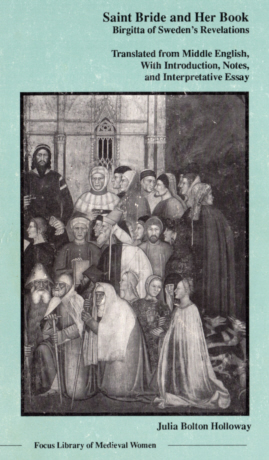

Saint Bride and Her Book: Birgitta of Sweden's Revelations Translated from Latin and Middle English with Introduction, Notes and Interpretative Essay. Focus Library of Medieval Women. Series Editor, Jane Chance. xv + 164 pp. Revised, republished, Boydell and Brewer, 1997. Republished, Boydell and Brewer, 2000. ISBN 0-941051-18-8
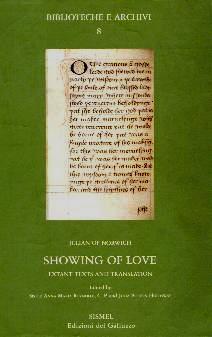 To see an example of a
page inside with parallel text in Middle English and Modern
English, variants and explanatory notes, click here. Index to this book at http://www.umilta.net/julsismelindex.html
To see an example of a
page inside with parallel text in Middle English and Modern
English, variants and explanatory notes, click here. Index to this book at http://www.umilta.net/julsismelindex.html
Julian of
Norwich. Showing of Love: Extant Texts and Translation. Edited.
Sister Anna Maria Reynolds, C.P. and Julia Bolton Holloway.
Florence: SISMEL Edizioni del Galluzzo (Click
on British flag, enter 'Julian of Norwich' in search
box), 2001. Biblioteche e Archivi
8. XIV + 848 pp. ISBN 88-8450-095-8.
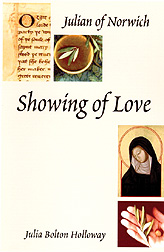 To see inside this book, where God's words are
in red, Julian's in black, her
editor's in grey, click here.
To see inside this book, where God's words are
in red, Julian's in black, her
editor's in grey, click here.
Julian of
Norwich. Showing of Love. Translated, Julia Bolton
Holloway. Collegeville:
Liturgical Press;
London; Darton, Longman and Todd, 2003. Amazon
ISBN 0-8146-5169-0/ ISBN 023252503X. xxxiv + 133 pp. Index.
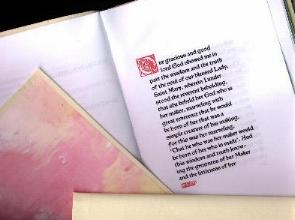 To view sample copies, actual
size, click here.
To view sample copies, actual
size, click here.

'Colections'
by an English Nun in Exile: Bibliothèque Mazarine 1202.
Ed. Julia Bolton Holloway, Hermit of the Holy Family. Analecta
Cartusiana 119:26. Eds. James Hogg, Alain Girard, Daniel Le
Blévec. Salzburg: Institut für Anglistik und Amerikanistik
Universität Salzburg, 2006.
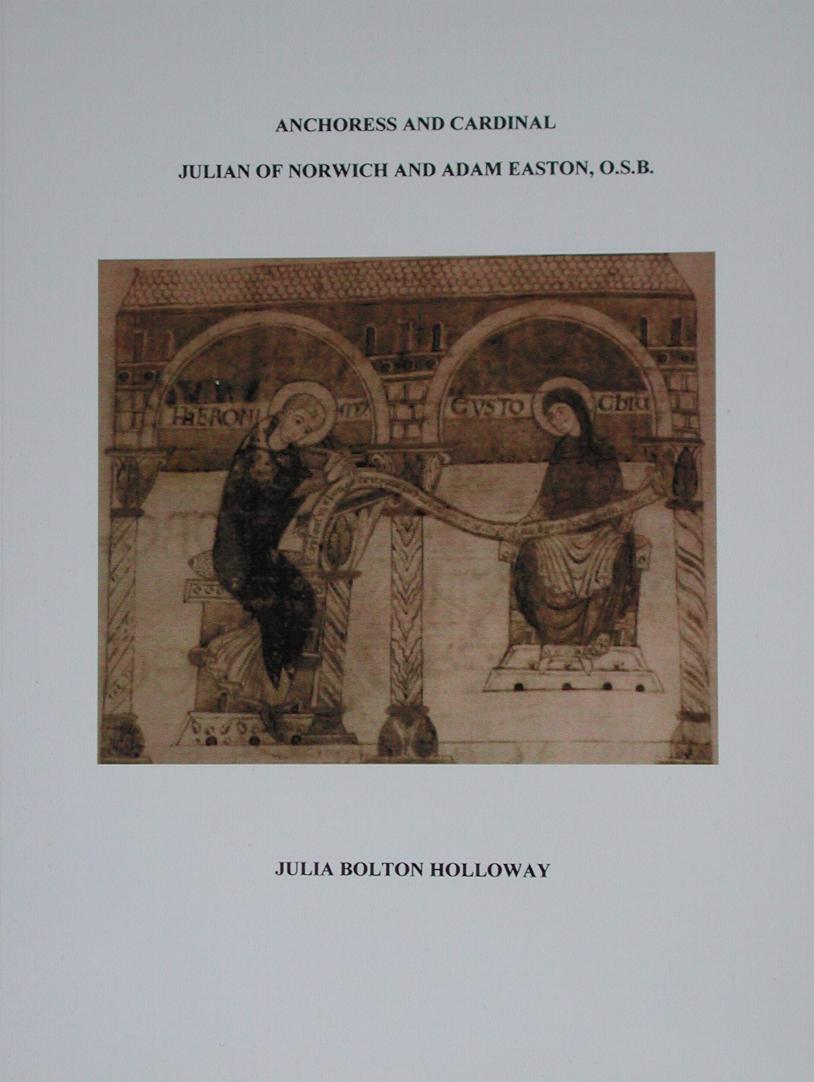
Anchoress and Cardinal: Julian of
Norwich and Adam Easton OSB. Analecta Cartusiana 35:20 Spiritualität
Heute und Gestern. Salzburg: Institut für Anglistik und
Amerikanistik Universität Salzburg, 2008. ISBN
978-3-902649-01-0. ix + 399 pp. Index. Plates.
Teresa Morris. Julian of Norwich: A
Comprehensive Bibliography and Handbook. Preface,
Julia Bolton Holloway. Lewiston: Edwin Mellen Press, 2010.
x + 310 pp. ISBN-13: 978-0-7734-3678-7; ISBN-10:
0-7734-3678-2. Maps. Index.

Fr Brendan
Pelphrey. Lo, How I Love Thee: Divine Love in Julian
of Norwich. Ed. Julia Bolton Holloway. Amazon,
2013. ISBN 978-1470198299

Julian among
the Books: Julian of Norwich's Theological Library.
Newcastle upon Tyne: Cambridge
Scholars Publishing, 2016. xxi + 328 pp. VII Plates, 59
Figures. ISBN (10): 1-4438-8894-X, ISBN (13)
978-1-4438-8894-3.

Mary's Dowry; An Anthology of
Pilgrim and Contemplative Writings/ La Dote di
Maria:Antologie di
Testi di Pellegrine e Contemplativi.
Traduzione di Gabriella Del Lungo
Camiciotto. Testo a fronte, inglese/italiano. Analecta
Cartusiana 35:21 Spiritualität Heute und Gestern.
Salzburg: Institut für Anglistik und Amerikanistik
Universität Salzburg, 2017. ISBN 978-3-903185-07-4. ix
+ 484 pp.
  |
To donate to the restoration by Roma of Florence's
formerly abandoned English Cemetery and to its Library
click on our Aureo Anello Associazione:'s
PayPal button: THANKYOU! |
JULIAN OF NORWICH, HER SHOWING OF LOVE
AND ITS CONTEXTS ©1997-2024 JULIA
BOLTON HOLLOWAY
| || JULIAN OF NORWICH
|| SHOWING
OF LOVE || HER TEXTS
|| HER SELF || ABOUT HER TEXTS || BEFORE JULIAN || HER CONTEMPORARIES || AFTER JULIAN || JULIAN IN OUR TIME || ST BIRGITTA OF SWEDEN
|| BIBLE AND WOMEN || EQUALLY IN GOD'S IMAGE || MIRROR OF SAINTS || BENEDICTINISM || THE CLOISTER || ITS SCRIPTORIUM || AMHERST MANUSCRIPT || PRAYER || CATALOGUE AND PORTFOLIO (HANDCRAFTS, BOOKS
) || BOOK REVIEWS || BIBLIOGRAPHY