UMILTA WEBSITE || OLIVELEAF
WEBSITE || JULIAN OF NORWICH,
TEXT AND CONTEXTS, WEBSITE || BIRGITTA
OF SWEDEN, REVELATIONES, WEBSITE || CATALOGUE AND PORTFOLIO (HANDCRAFTS,
BOOKS ) || BOOK REVIEWS ||
BIBLIOGRAPHY || FLORIN WEBSITE || ROM PORTAL ©1997-2024 JULIA BOLTON HOLLOWAY
FACCIAMO DUNQUE L'ELOGIO DEI ROM (GLI
ZINGARI)
LET US
NOW PRAISE THE ROM (GYPSIES)
FOTO DI KAREN GRAFFEO

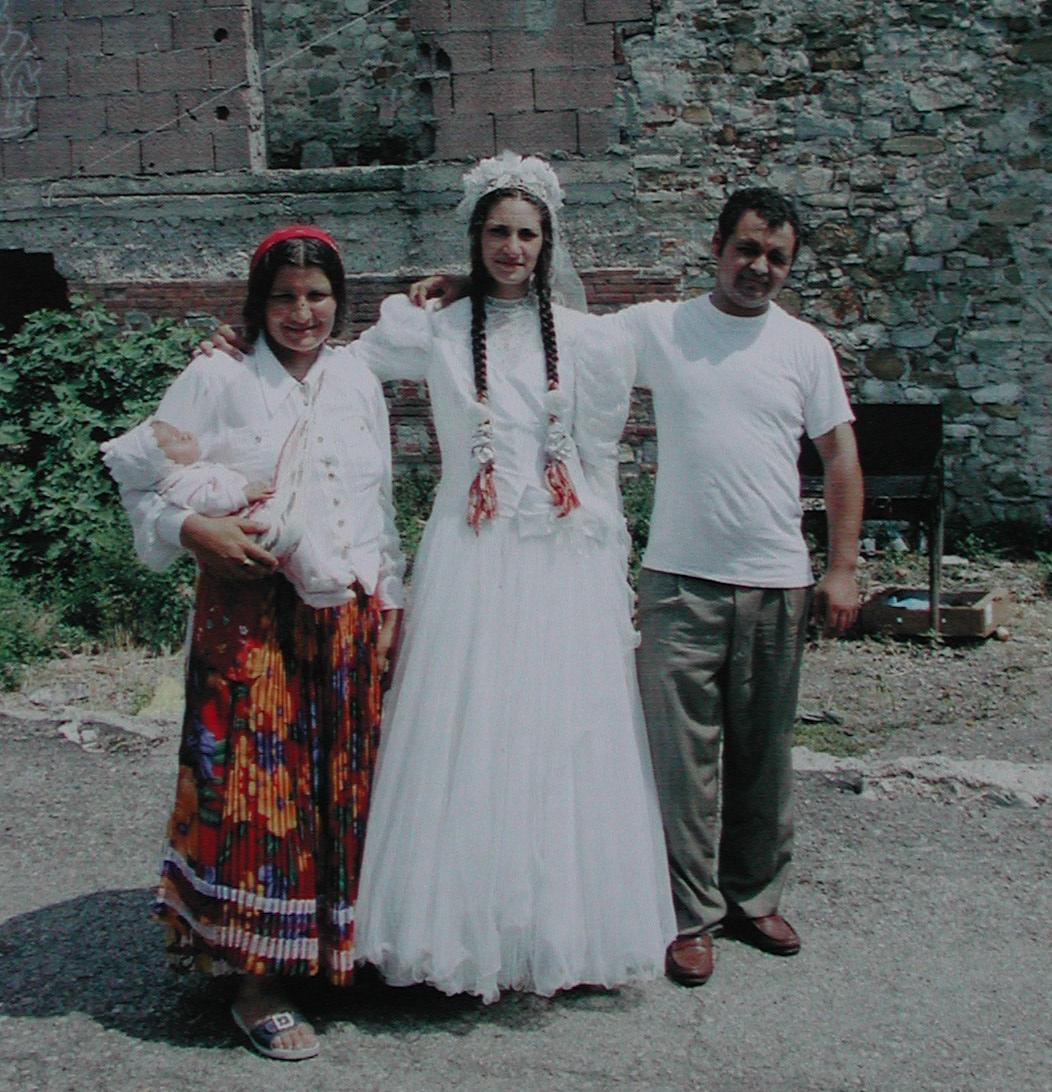
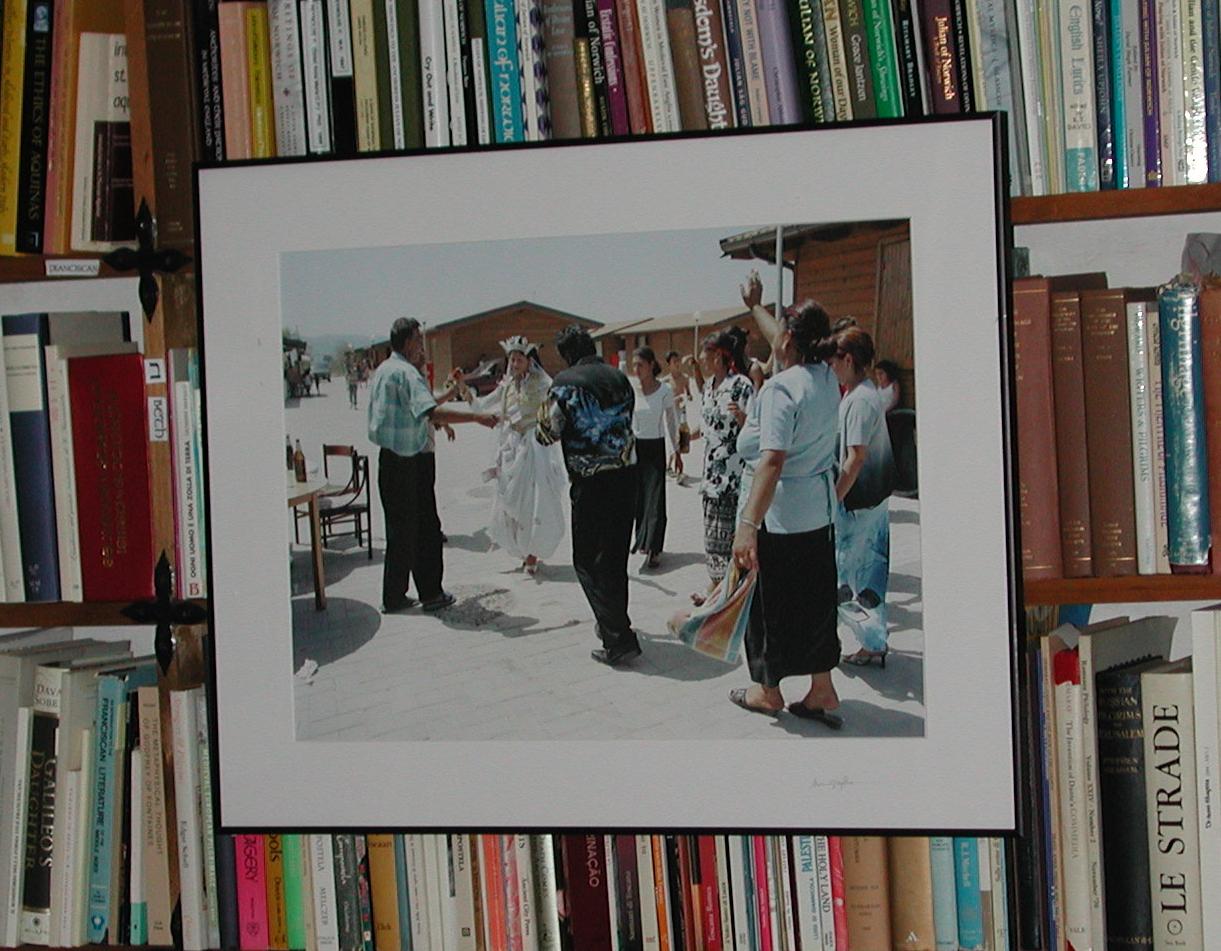
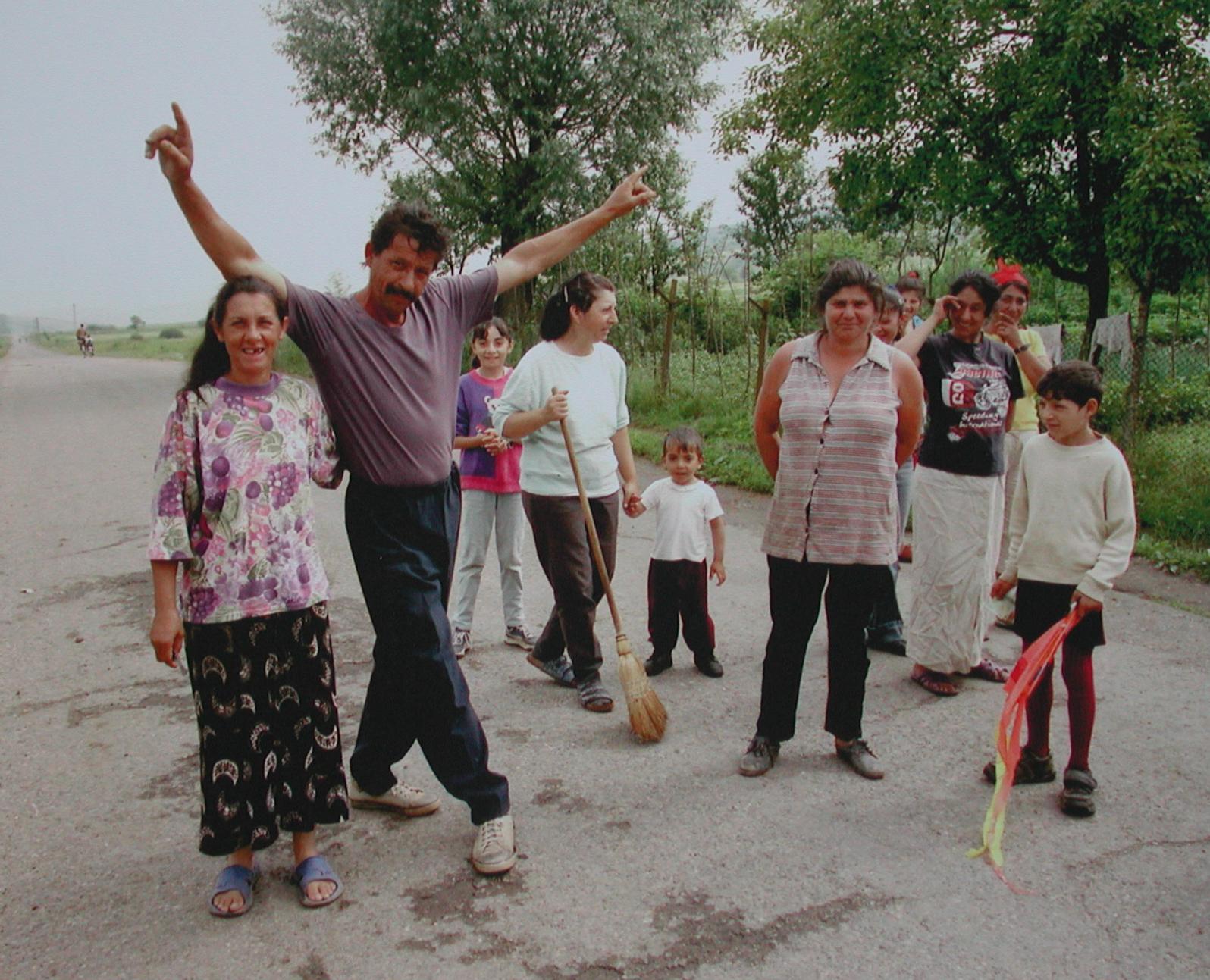
La mostra presenta una documentazione
fotografica che illustra cinque anni di vita nei campi
islamici
rom in italia ed il Festival a Saintes-Maries-de-la-Mer in
Francia.
______________
Giovedì 19 giugno 2003 alle ore 18.30 una
festa, con danze e musica, inaugurerà la mostra.
Esposizione fotografica dal 19 giugno al
3 agosto 2003
presso
Les Broches L'Ancienne
21 Rue Saint-Nicolas 75012
M Ledru-Rollin ou Bastille
________________
1-30 marzo 2007 / March 1-30, 2007
SACI Gallery
Studio Art Centers International
Palazzo dei Cartelloni
Via Sant'Antonino, 11
50123 Firenze
________________
Dal 12 aprile 2007
presso
Biblioteca e Bottega Fioretta Mazzei
Cimitero detto "degli Inglesi"
Piazzale Donatello, 38, I-50132 FIRENZE, ITALIA
_______________
Ho trovato una
preziosa umanità in questa cultura. Ho imparato dai Rom
molte cose sulla tenerezza, la devozione e la
soppravvivenza. Le mie fotografie saranno disponibili al
pubblico e una percentuale dei proventi sarà donata ai miei
amici Rom che lottano duramente per proteggere le loro
famiglie, preservare la loro cultura, e per avere una dimora
in questo mondo.

I have learned a precious humnaity in this culture.
I learned from the rom much about tenderness, devotion and
survival. My photographs are available to the public, a
percentage of what I recieve going to my Rom friends who work
hard to protect that families, their culture and to have a
dwelling in this world.
The Rom flag is blue for the sky, green for the
earth, with the red wagon wheel. They came from India to
Europe in the Middle Ages, and their flag is taken from that
for India. They have no state, no frontiers, no army.
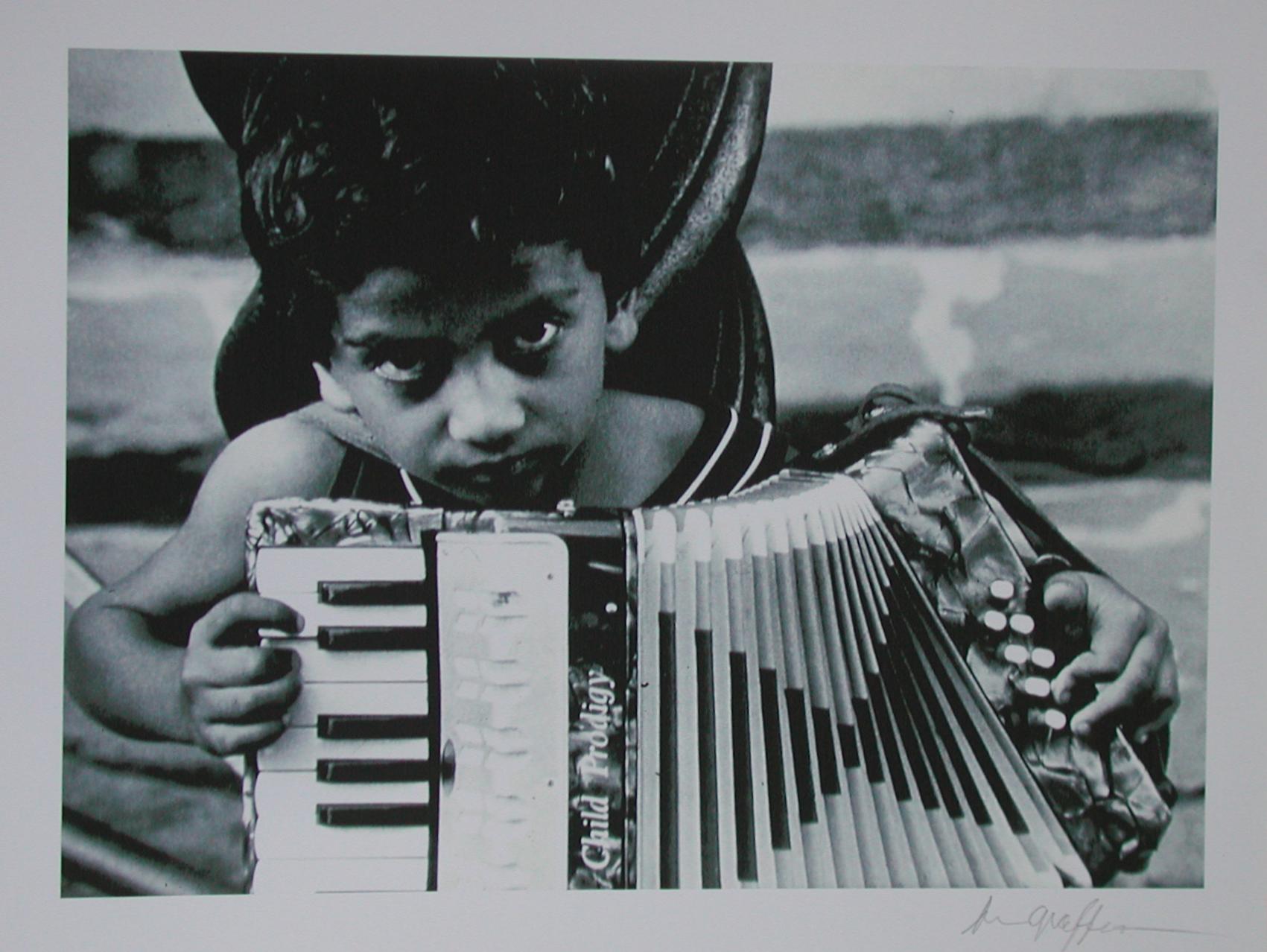
LET US NOW PRAISE THE ROM
Since 1999 I have been visiting with various groups of
Roma (Rom, Gypsies), and documenting their culture inside
refugee encampments, caravans, slums and public housing projects
in Italy. I want the work to portray the warm humanity and
courage of the Roma peoples, Europe's largest minority. I am
aware of many problems and challenges they face, The first time
I heard the traditional Roma music I heard the canto hondo (the deep
song). I had a longing to go to the source of the powerful music
and to know something of its people. I was born in South
Mississippi and I realized a shock of recognition between the canto hondo and the blue
and fa-so-la shaped note gospel singing from my childhood
church. In 1999, I borrowed money and time to travel to learn
more about the music and culture of the Roma. I admit, I did not
know what I was doing or how to begin. Miraculously, I was
invited into a Roma refugee campo
(encampment) near Bologna, Italy. I have been educated in life
now and transformed in ways I never could have anticipated.
These photographs are a testament to the generosity and
tolerance of the Roma who welcomed me.
I
admire the tender, raw honesty of Walker Evans' and James Agee's
documentary Let Us Now Praise
Famous Men. Their work, which focuses on sharecropper
families in the Deep South during the great depression, set a
standard of intimacy that I wished for my stay with the Roma
families. Similar to Evans and Agee, I did not go into Roma
culture as a journalist or privileged tourist, and I had no idea
if I would be accepted. Since I was unskilled at languages, my
camera was my empty begging bowl and these many families have
been most generous in teaching me over the years about their
culture. I was first so honored with an invitation into Campo de
Santa Caterina, an encampment of Khorakhane (the way of the Koran) Roma in
Bologna, Italy in 1999. My visits there taught me much
about their lives and about survival. At that time there was an
effort to smuggle in Roma refugees from Kossovo and Bosnia and
during my visits refugees would arrive weekly and begin building
baracche (huts). And it
was tense for them, because without proper passports and
documents, they were so vulnerable and had to hide their status
and location.
The
Roma are survivors and brilliant cultural mediators. They
maintain ancient traditions, their language which is similar to
Hindi or Sanskrit, their stories, music, while resettling into
cultures and countries with very different beliefs and
practices. There is often a clash as they enter a new culture.
The Roma has never had a nation, yet they maintain their
identity as an ethnic group with a distinct culture.
The
photographs depict daily life inside various campi (encampments). The
first, Campo di Santa Caterina, was small, with approximately 40
families. Anna Lukaci and her husband Suald, let me visit in
their baracca inside
this encampment. On April 3, 2000 a fire destroyed their baracca and killed both of
their children, a toddler named Amanda and a baby named Alex. I
have returned many times since this tragedy and it is Anna's
spirit and will to survive that motivates me to continue this
documentary. I have seen the power of her courage to embrace all
aspects of life. I see other Roma refugee women who must carry
terrific responsabilities. I hope that this work will create
awareness and proceeds to help with the preservation of this
unique culture.
After
the tragic fire, I became reunited with Anna's family inside
Poderaccio, a 200 family Khorakhane
campo, outside Florence, Italy. Poderaccio
figures prominently in my work, primarily because most of the
families are Roma refugees. Not all Roma are refugees, but in
Poderaccio many have fled countries where there is violence or
genocide. It is no longer possible for Roma to be nomadic as it
is difficult to cross borders and to obtain political asylum. It
is even more difficult for them to obtain documents to allow
them to seek work. I am seeing now cooperation between the Roma
and brave activists in Italy who negotiate for the safety and
rights of the Roma.
In
Poderaccio there is a spiritual leader, an Imam; he is Sufi, a
mystic Muslim. In the traditional practice of the religion, it
is not permitted to make a photograph containing a human
representation. I am careful to honor and to be prepared when I
am given his permission to use my camera. I am invited to read
and write with his family and children and, given my status as a
western woman, I was especially honored when he invited me to
enter the mosque, in a baracca in the center of the encampment.
The photographs I make inside this community are more formal
than those made in Campo di Santa Caterina because I must seek
permission and it is more complicated and risky to make a
photograph. Many families now want to be photographed; it has
taken years to build this relationship and trust. An outsider
could easily be a journalist or undercover agent so feared by
undocumented refugees. At each camp there is even a check point
carefully guarded by Roma, it is impossible to enter without
their invitation and trust. I am not allowed to tell the names
of the location of some images I have made.
In
August 2004, Poderaccio was destroyed by bulldozers and the
families were scattered. When a camp becomes too large there is
often desperation and problems beyond the control and influence
of the Imam of the camp or the Italian government. The Italian
government tries to offer some relocation for these families,
but it is overwhelming and there are many problems and difficult
issues. The Commune in Firenze built wonderful wooden houses for
some of the families that were so long in Poderaccio. I also see
now many families from this camp who live in public housing and
some that are totally homeless like the many Roma refugees
arriving from Romania. These are Romanian Orthodox rather than
Muslim. I hope to do more to document the unique lifestyle and
issues facing the Roma from Eastern Europe that are arriving in
Italy.
This
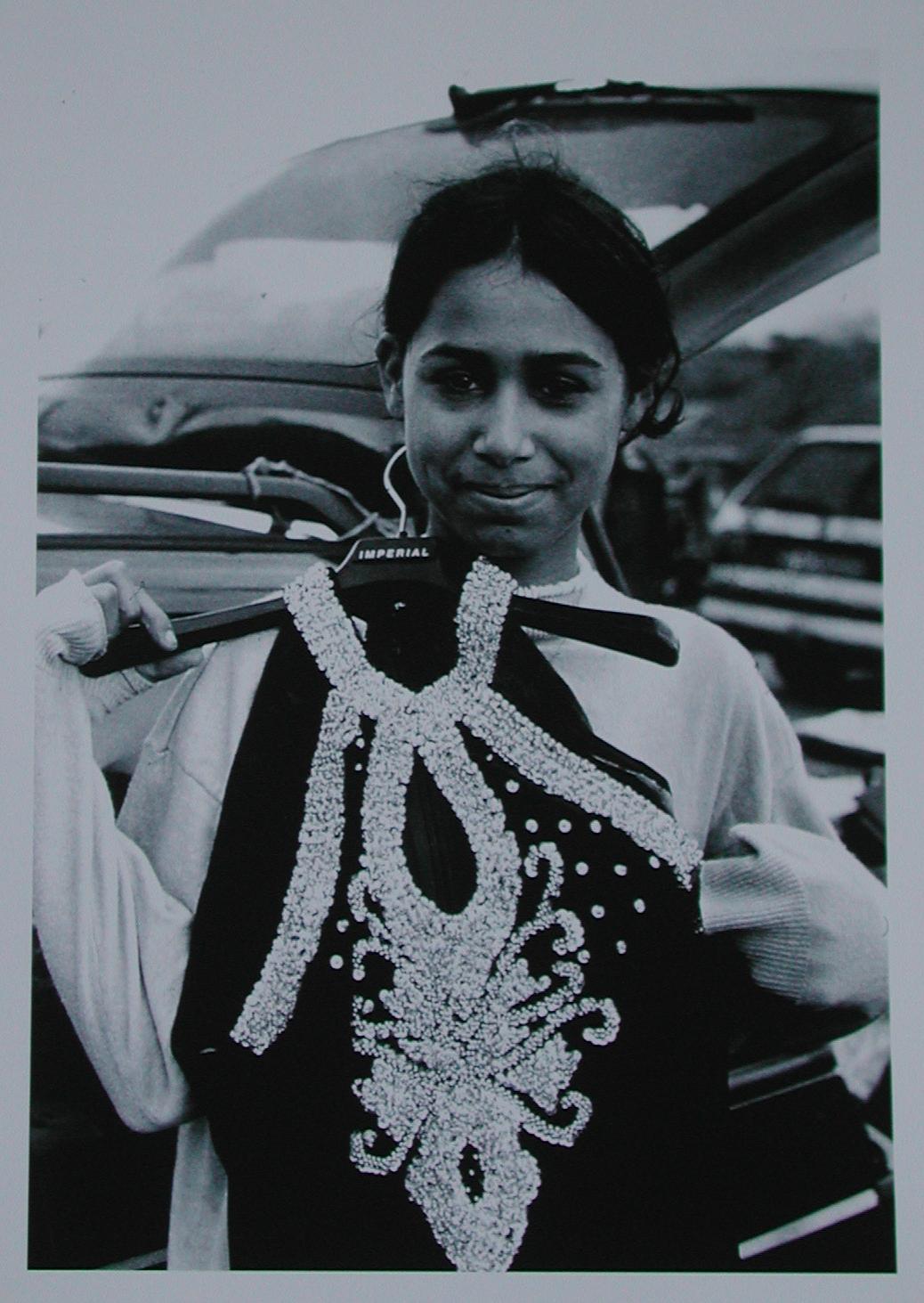
work has changed in technique over the years. I began this
project with quite limited equipment and funding. I had only one
35mm camera. So I photographed with that camera using black and
white film that was sensitive in low light. I did not want to be
mistaken as a journalist, an expert, or an immigration agent, so
my unpretentious equipment was perfect for the intimate moments
that I was living and documenting. Many of the images made in
1999 and 2000 are hand colored silver prints. I wanted to make
the grainy images made with 3200 film more detailed and to
portray the wonderful colors in the dress and homes in the
camps. To be quite honest, I was proud of my printing skills and
thought that the black and white images were good for that type
of film. But, upon returning to the camps with photographs as
gifts for the families, I learned that they thought the black
and white images were somber and resembled the images commonly
found on Italian tombs. This highly motivated my hand coloring
of the black and white images.
So this documentary is truly a
collaboration . I hope my work is an opportunity for the Roma to
present their own lives without the restraints of the
mythologies and projections from society. In late 2000 I
purchased a medium format camera which has allowed me to make
higher resolution images and to print the photographs at a
larger scale. As the families are now used to me, the larger
camera is neither intimidating nor suspicious, and I am now able
to present the Roma more life-size. There are so many myths
about the Roma and so many fantasies about what it is to be
"Gypsy". I hope the work continues to show the truth,
tenderness, fierceness and splendid contradictions of this
culture of brilliant survivors.
Karen
Graffeo

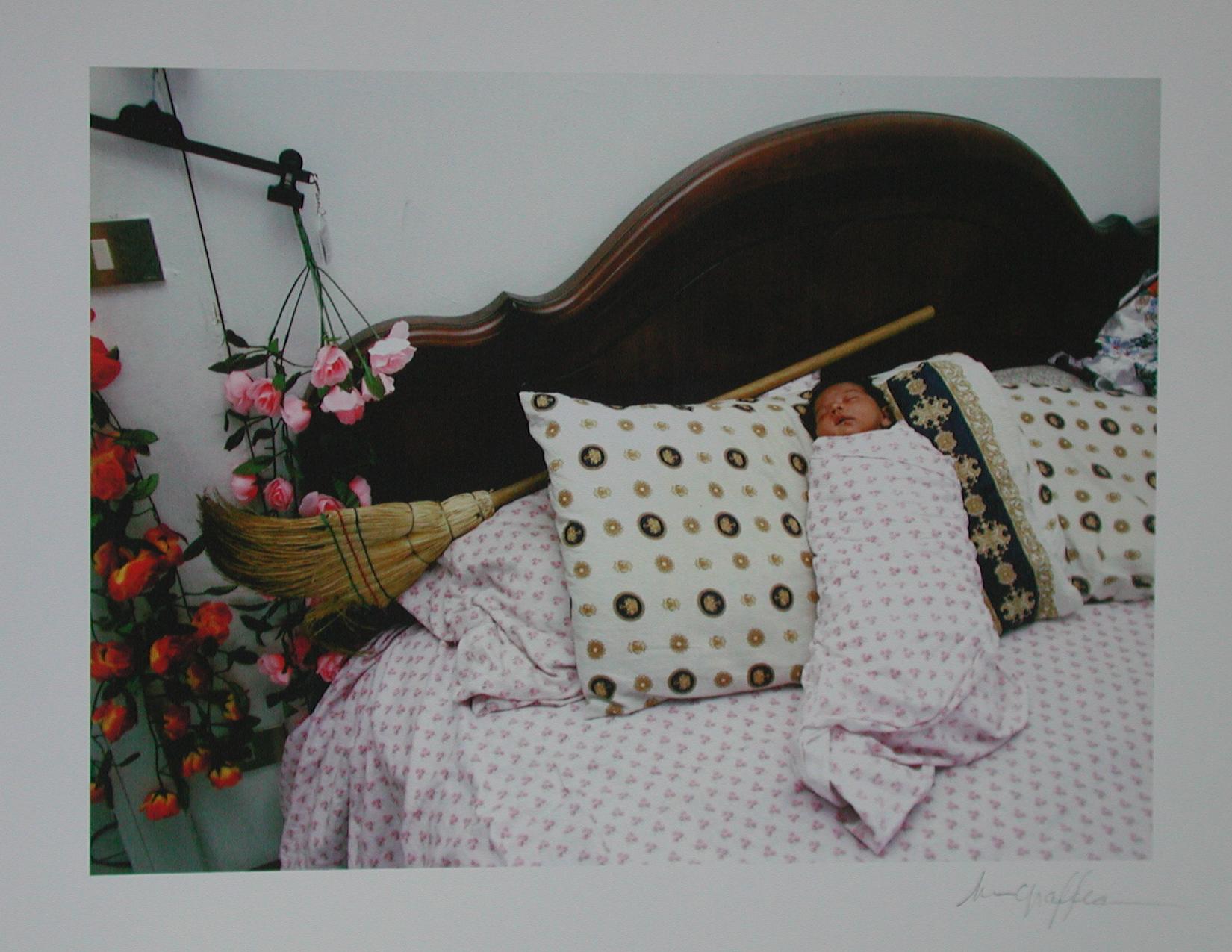
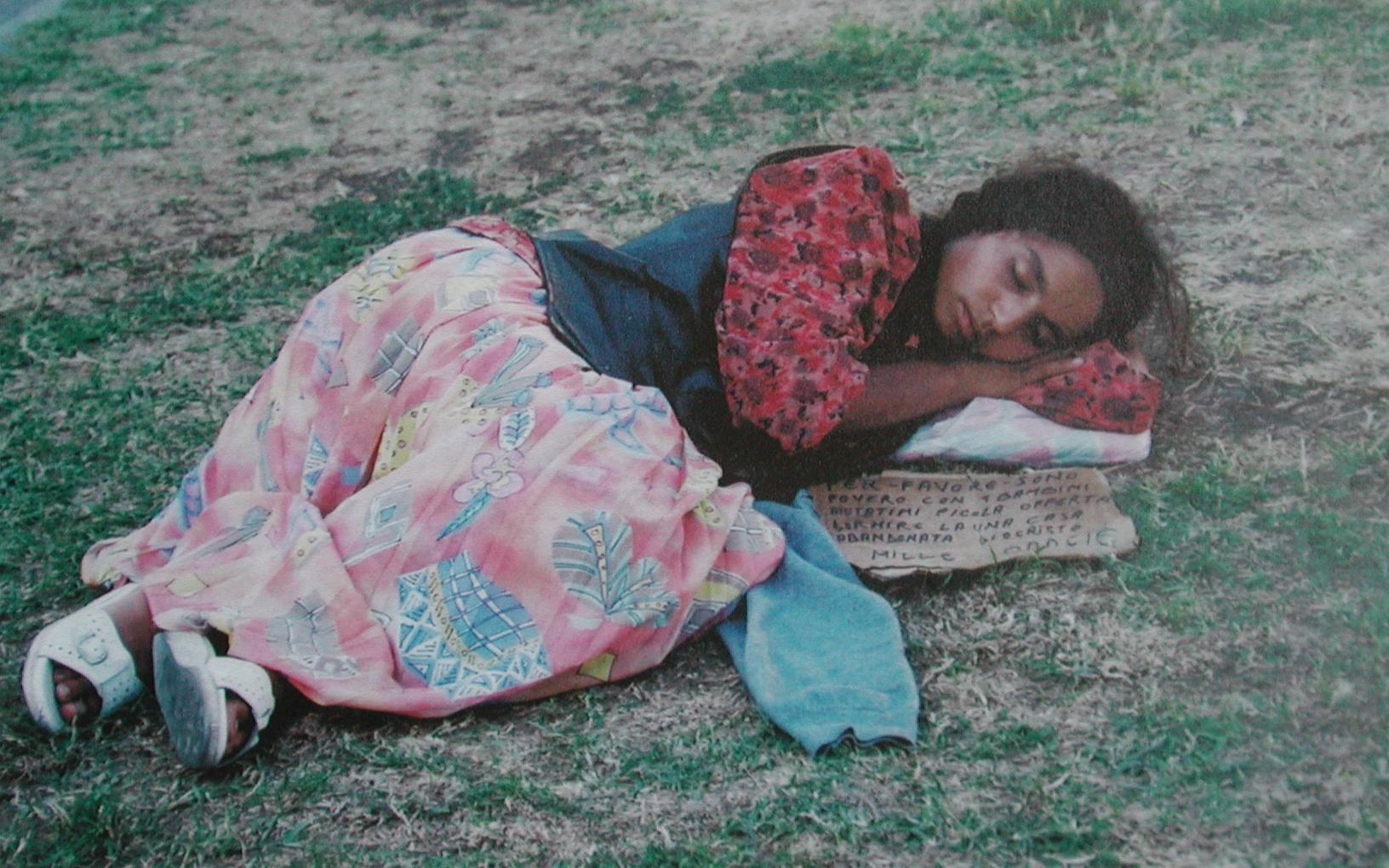
PER FAVORE SONO
POVERA CON 4 BAMBINI
AIUTARMI PICCOLA OFFERTA
[. . .] UNA CASA
ABBANDONATA DIO CRISTO
MILLE GRAZIE |
PLEASE, I AM
POOR WITH FOUR CHILDREN
HELP ME WITH A SMALL DONATION
[. . .] AN ABANDONED
HOUSE. GOD. CHRIST.
THOUSAND THANKS
|
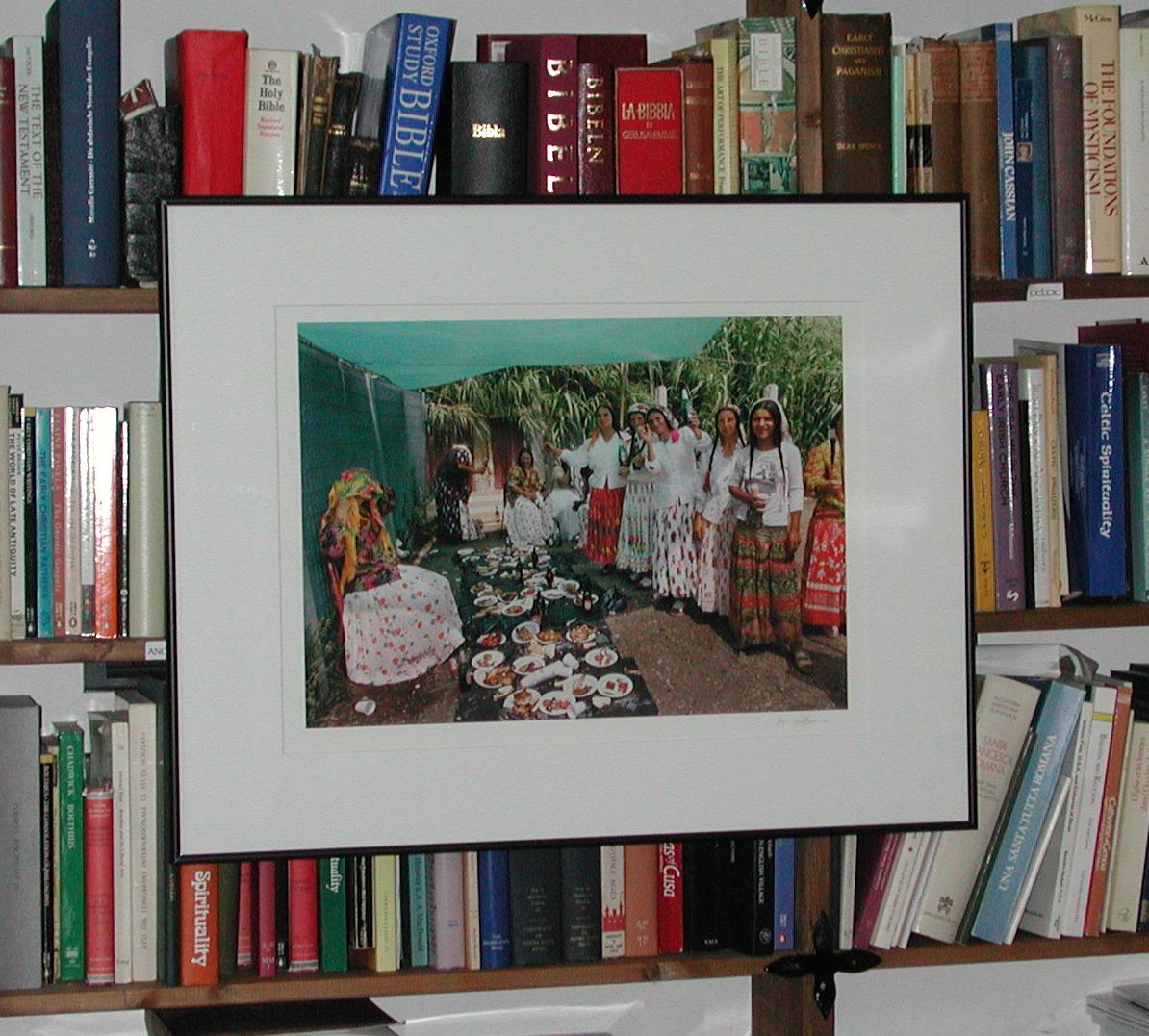
Karen Graffeo
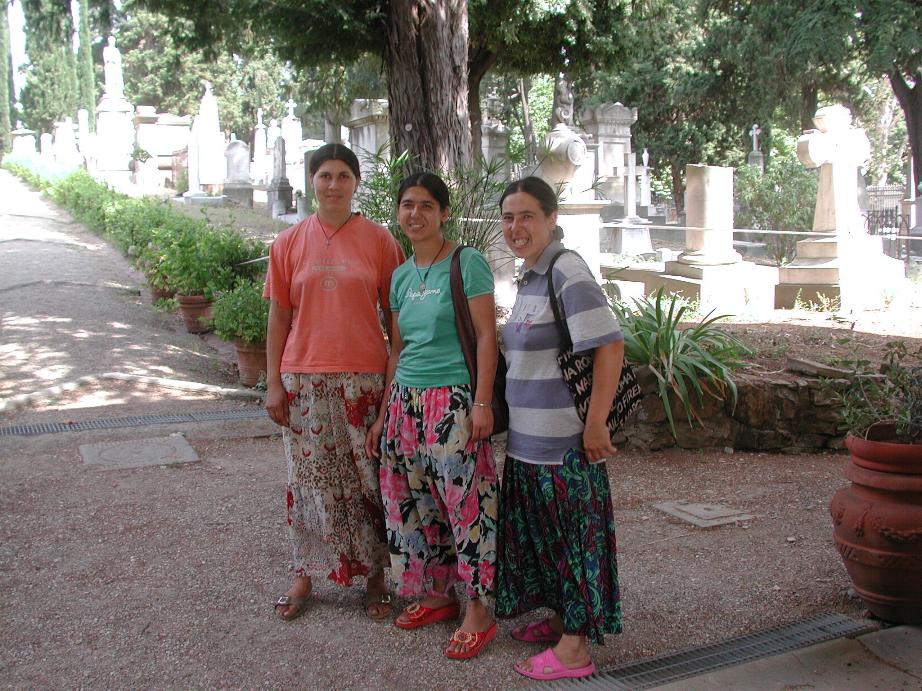
And then my Rom
friends from Romania, two sisters and a sister-in-law, came to
see this exhibition in the library where I have taught parents
how to sign their names so their babies can be returned to
them rather than be put up for adoption if born in Italian
hospitals. (This is a form of genocide.)


See also:
http://www.umilta.net/chuppa.html
http://www.umilta.net/hedera.html
RAI 1. Il Silenzio di Dio,
Isabella Schiavone, Easter Day, 2008, where these photographs in our
library were shown on Italian national television.
UMILTA WEBSITE
|| OLIVELEAF WEBSITE || JULIAN OF NORWICH, TEXT AND
CONTEXTS, WEBSITE || BIRGITTA
OF SWEDEN, REVELATIONES, WEBSITE || CATALOGUE AND PORTFOLIO (HANDCRAFTS,
BOOKS ) || BOOK REVIEWS
|| BIBLIOGRAPHY || FLORIN WEBSITE ||
ROM PORTAL ©1997-2024 JULIA BOLTON HOLLOWAY

